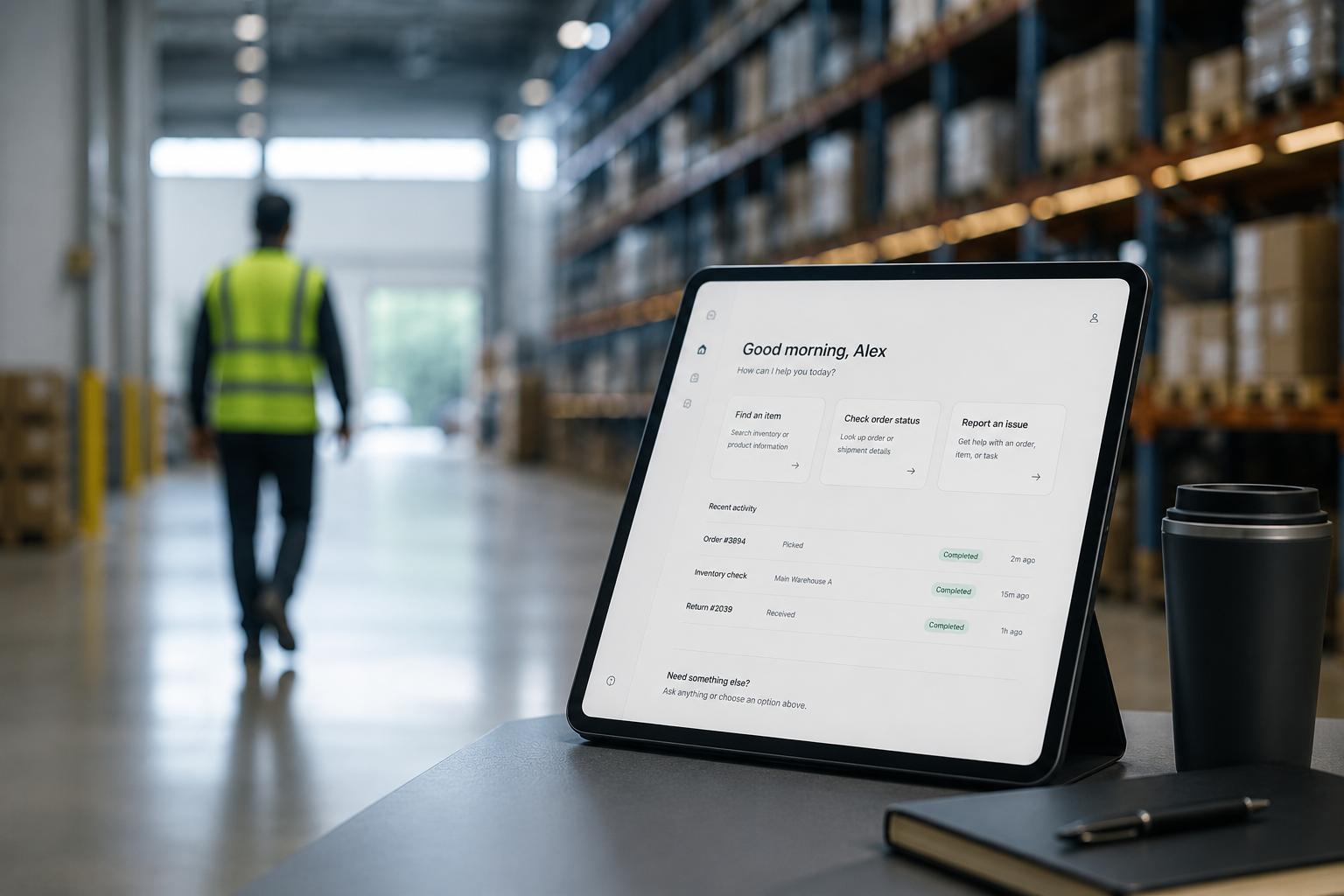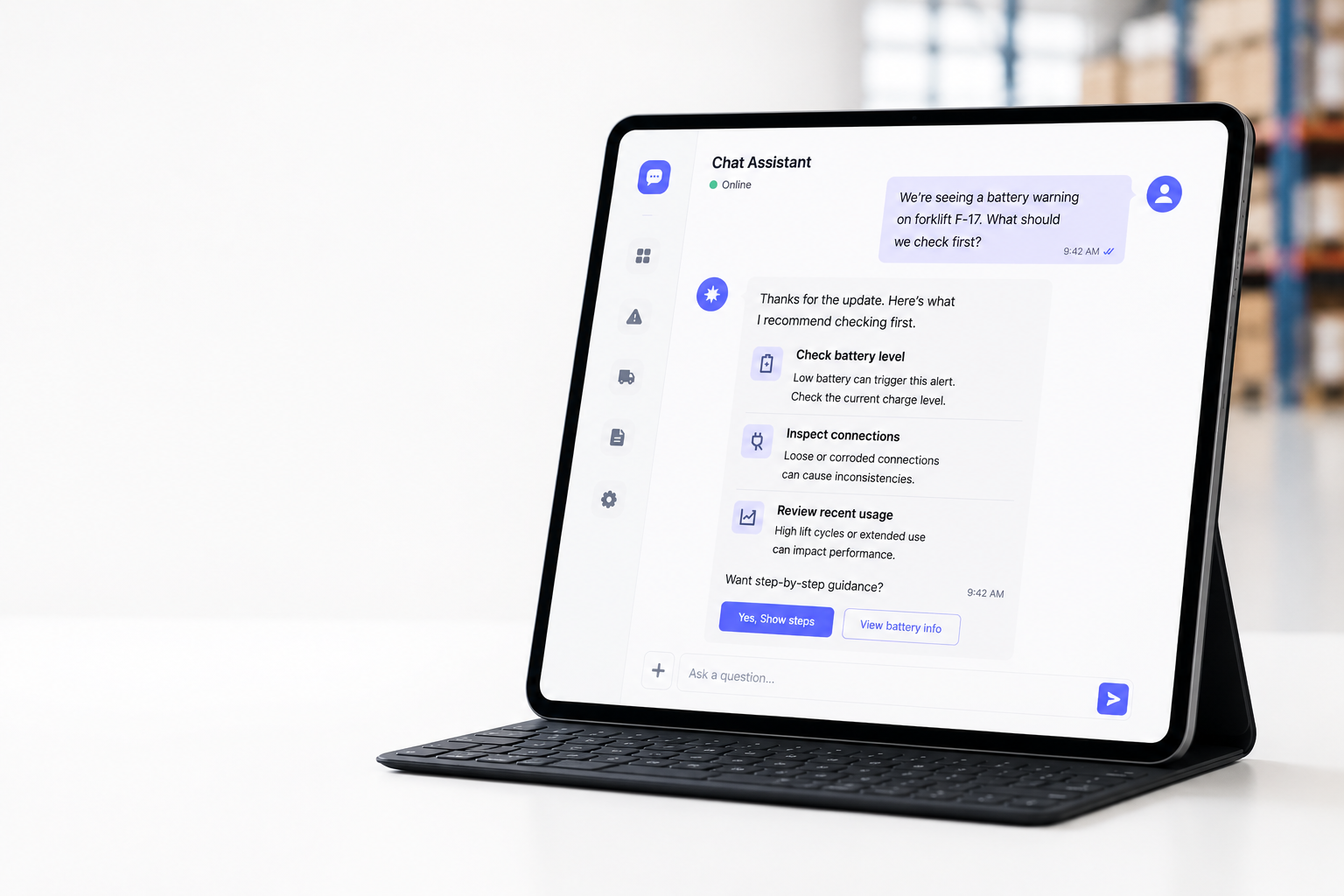
AI assistant for enterprise operations
Improving conversational UX for operational workflows
Some visuals and product details have been generalized due to confidentiality requirements. The UX writing process and content strategy reflect my actual contributions.
Role
UX Writer / Content Designer
Focus areas
Conversational UX, operational AI support, communication systems, enterprise workflows
Collaboration
Product design, interaction design, engineering, development, operational stakeholders
Overview
AI support should reduce friction, not add to it
A structured AI assistant designed to reduce friction, guide action, and support faster decision-making in warehouse environments
This project focused on improving conversational UX within an AI assistant used in a fleet management platform.
The assistant helps users complete operational tasks, access fleet information, navigate workflows, and quickly locate system data across high-volume operational environments.
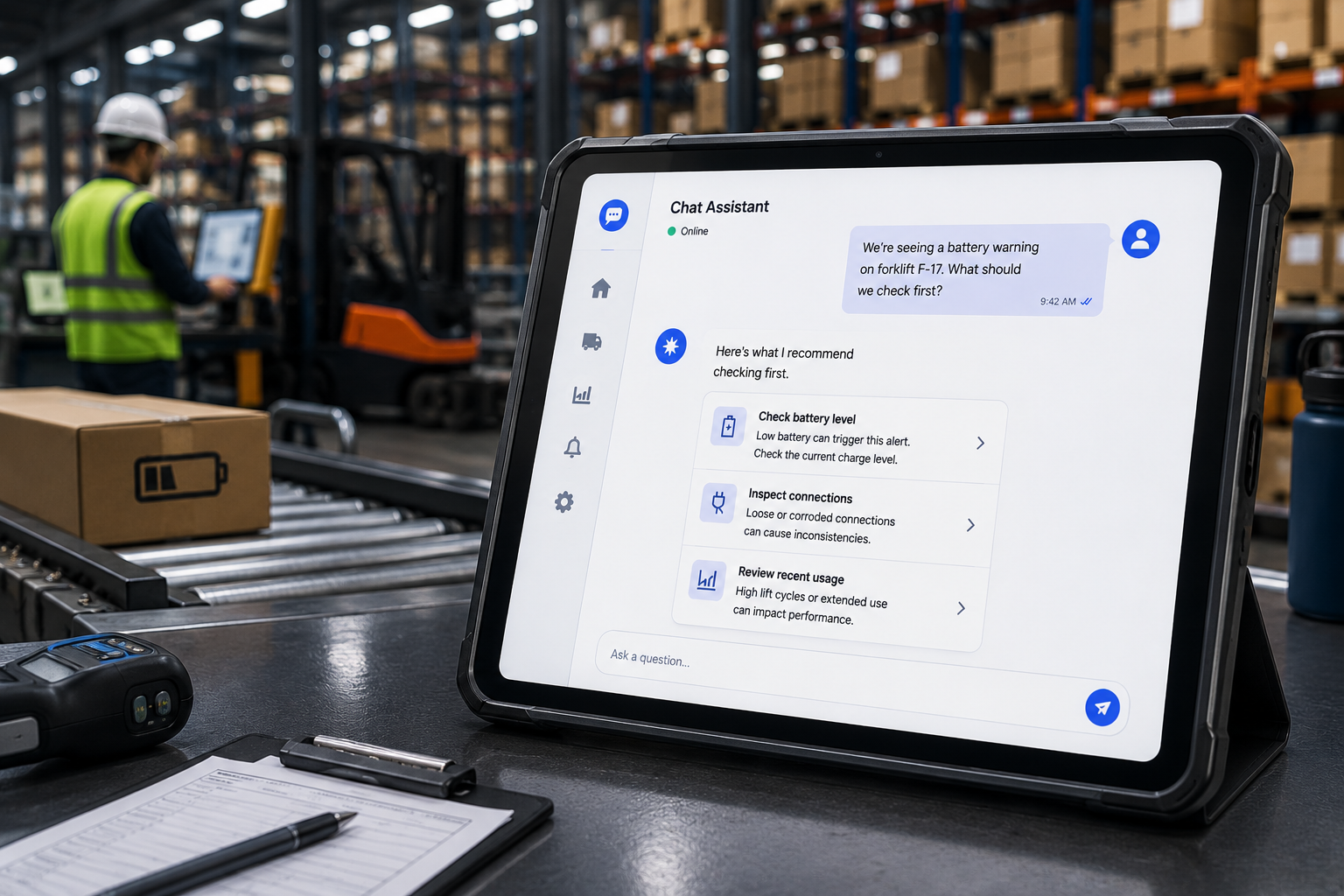


The problem
Complex systems need conversations that feel clear and actionable
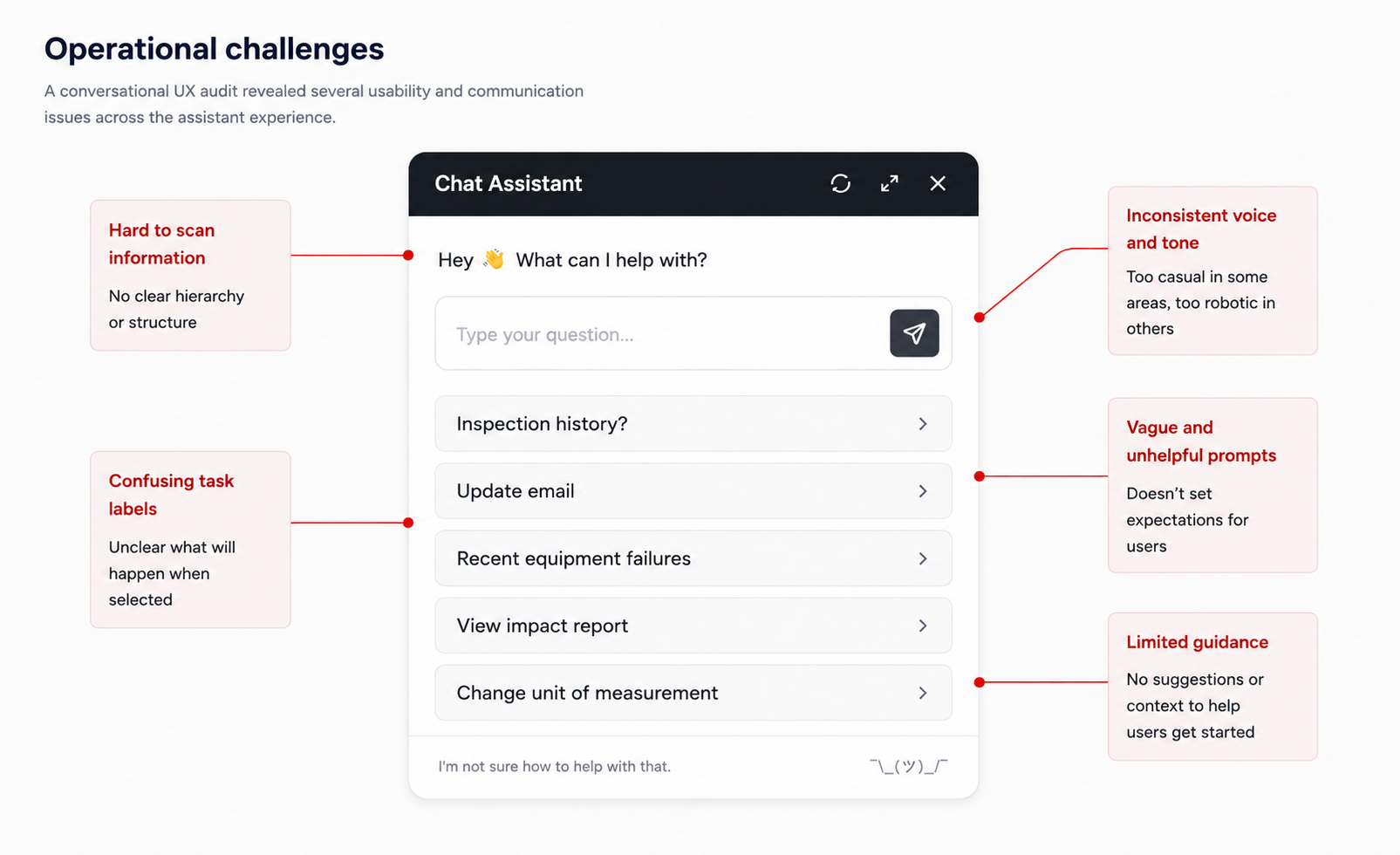
Traditional support experiences created unnecessary friction during time-sensitive operational tasks
“The challenge was to design an AI-assisted experience that could reduce friction, improve clarity, and provide actionable guidance without overwhelming users or disrupting operational focus.”
The Process
Better conversations start with better structure
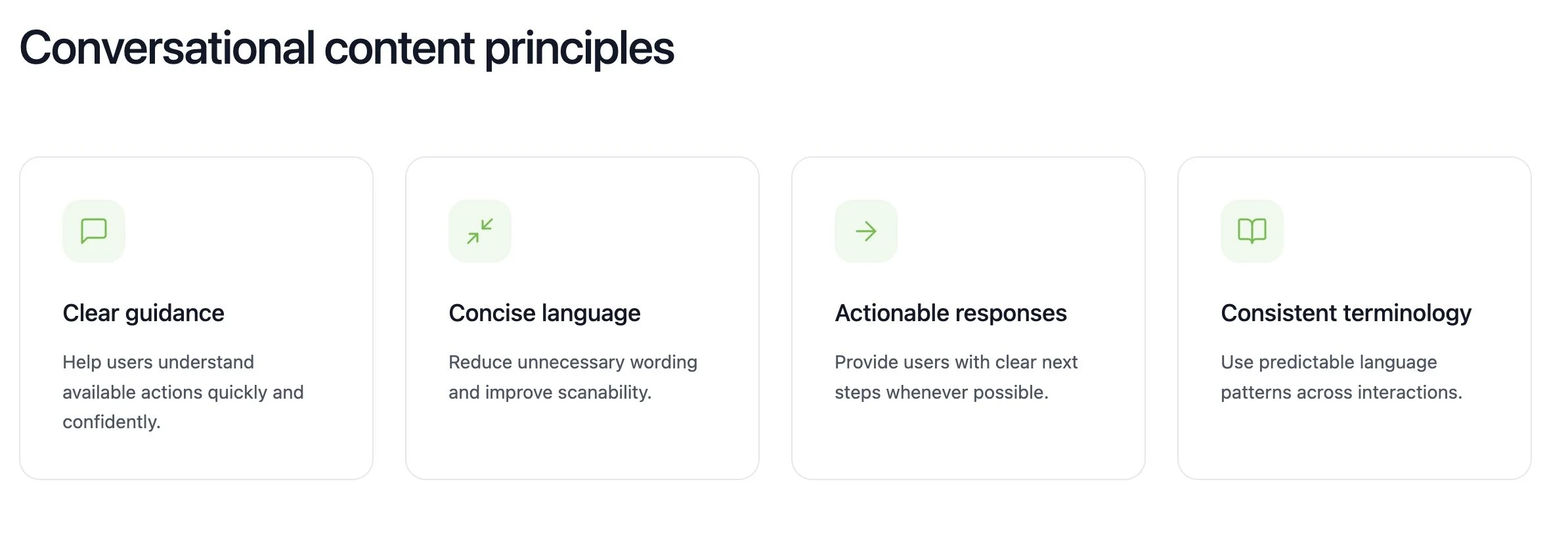
Reusable response patterns and conversational hierarchy helped create more consistent operational support experiences
Clarity-first responses
Designed structured AI communication patterns that supported operational clarity and faster task completion
Predictable workflows
Reusable interaction patterns helped users quickly understand what was happening and what to do next.
Scannable operational content
Concise, actionable language reduced friction within complex enterprise workflows.
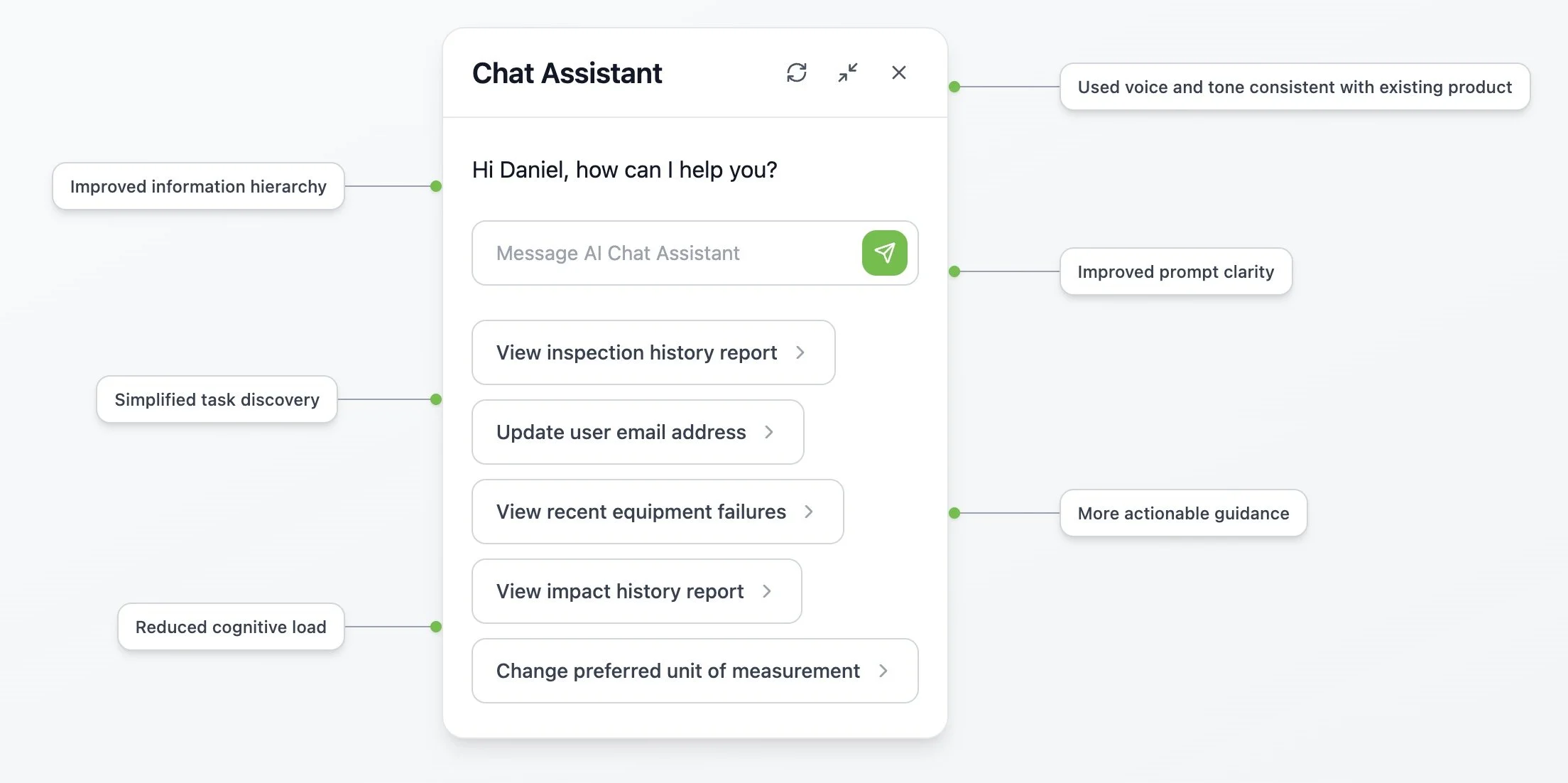
Clearer conversations create more confident interactions
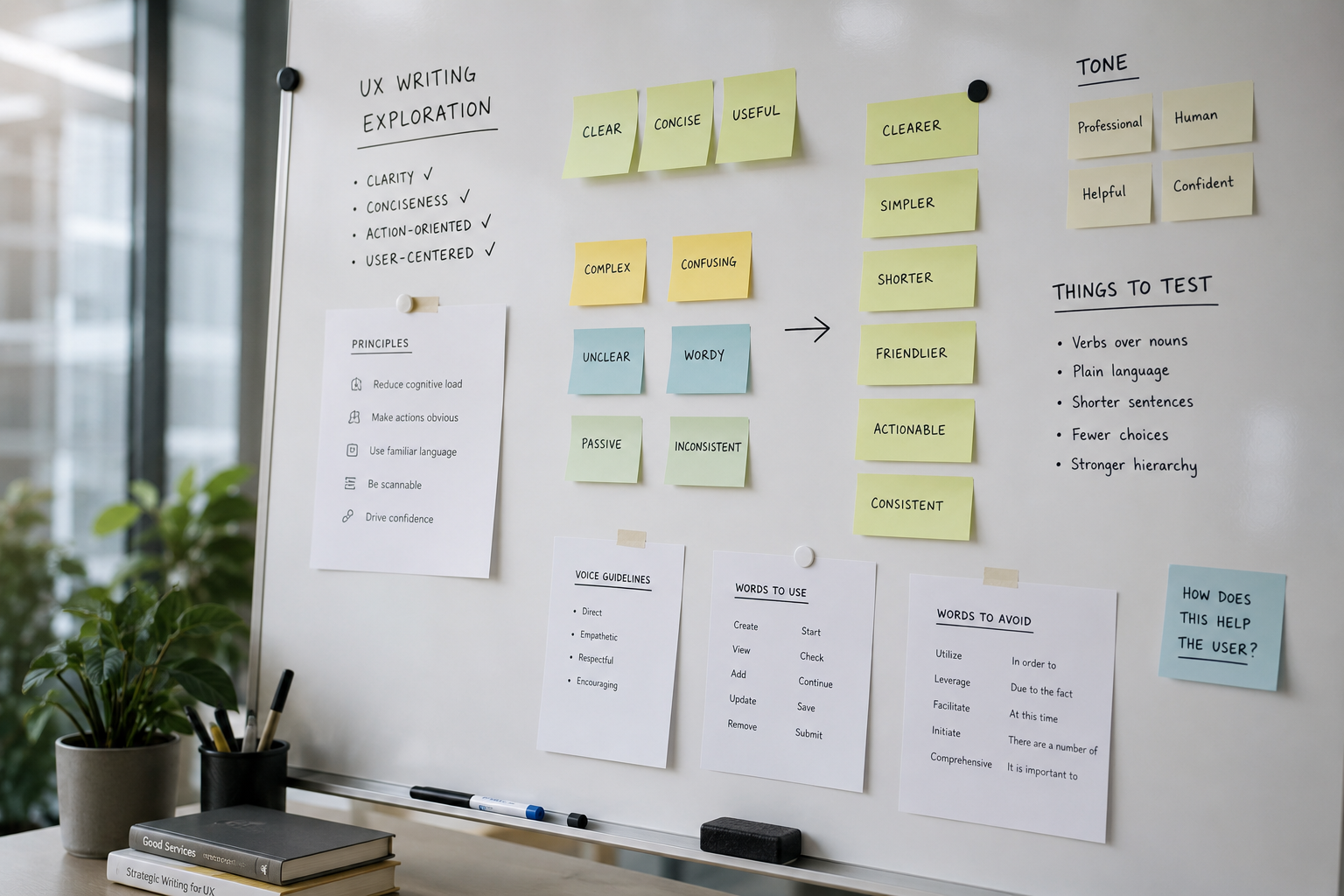
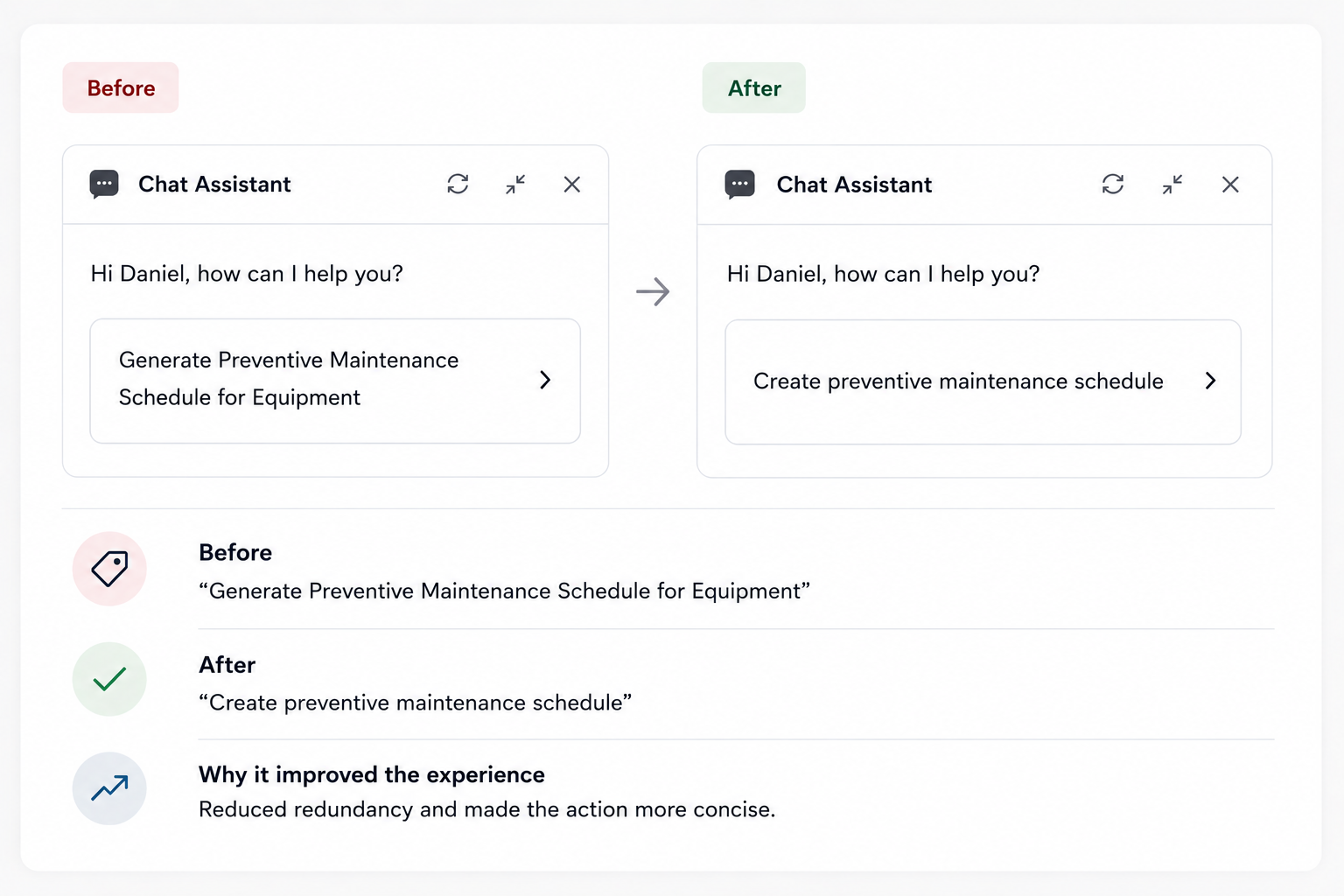
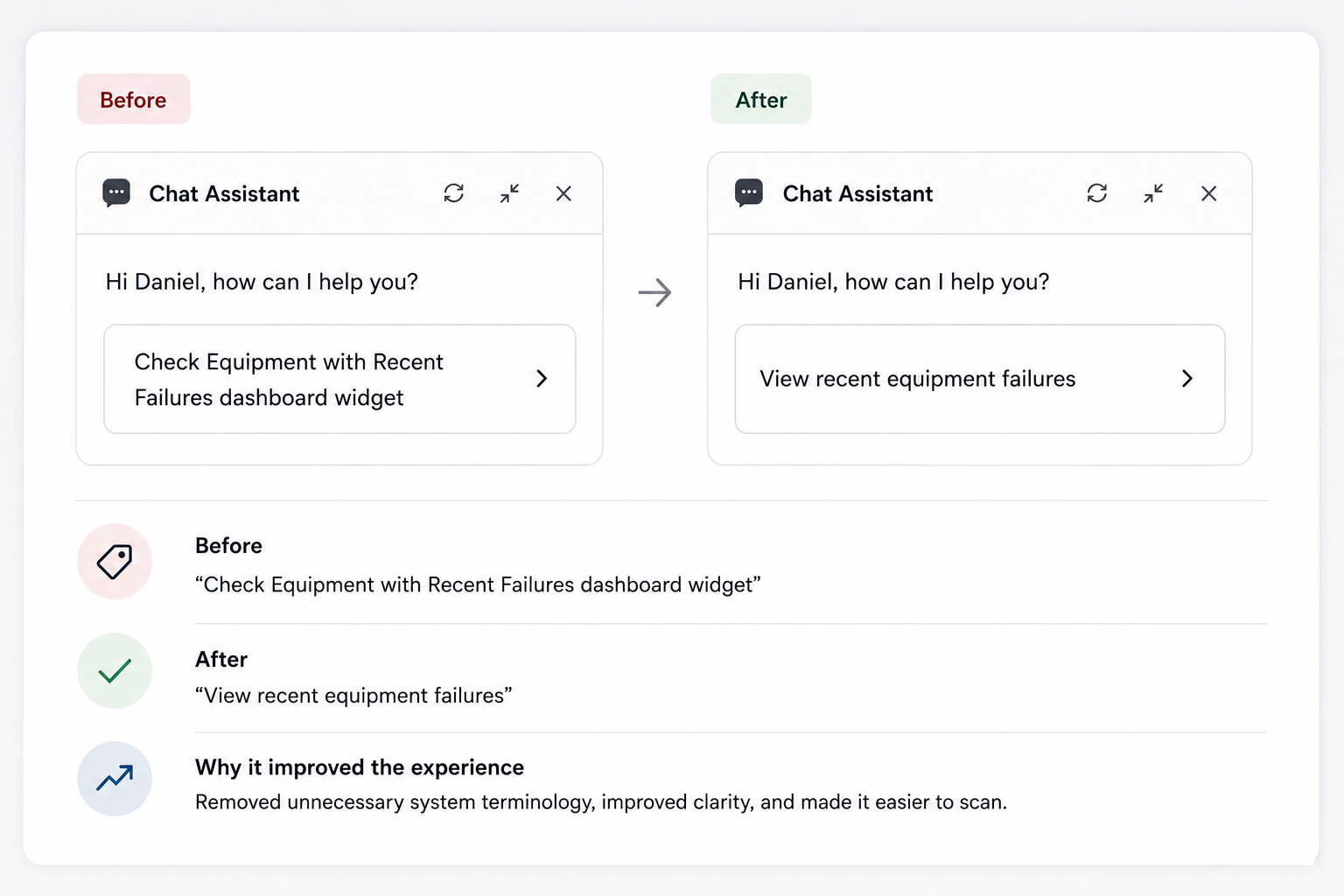
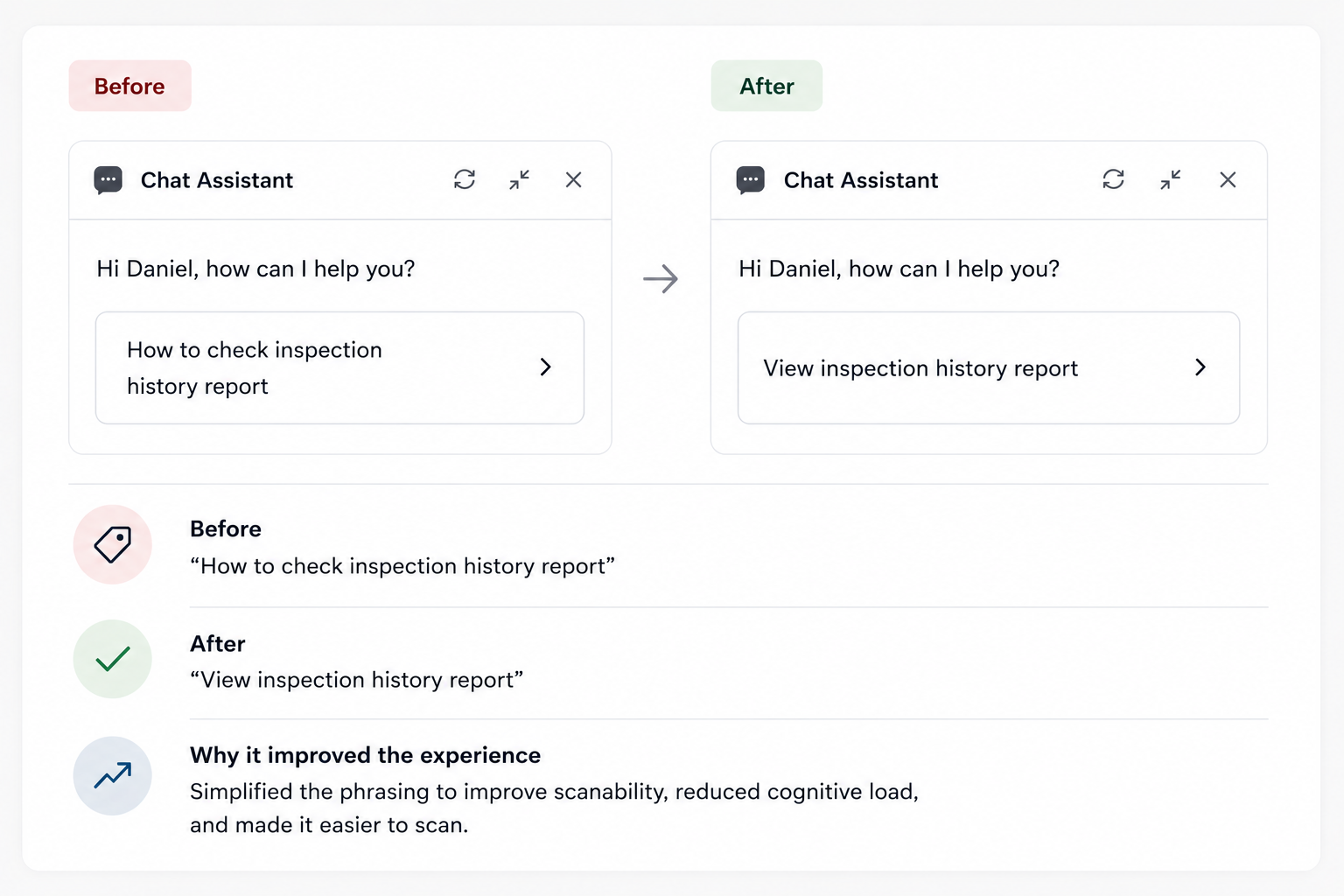
Many original prompts and responses relied heavily on technical terminology included unnecessary wording that increased cognitive load made interactions harder to scan quickly.
Goals:
improving clarity
reducing unnecessary complexity
creating more actionable conversational guidance
Outcomes & impact
Clearer prompts create more confident interactions
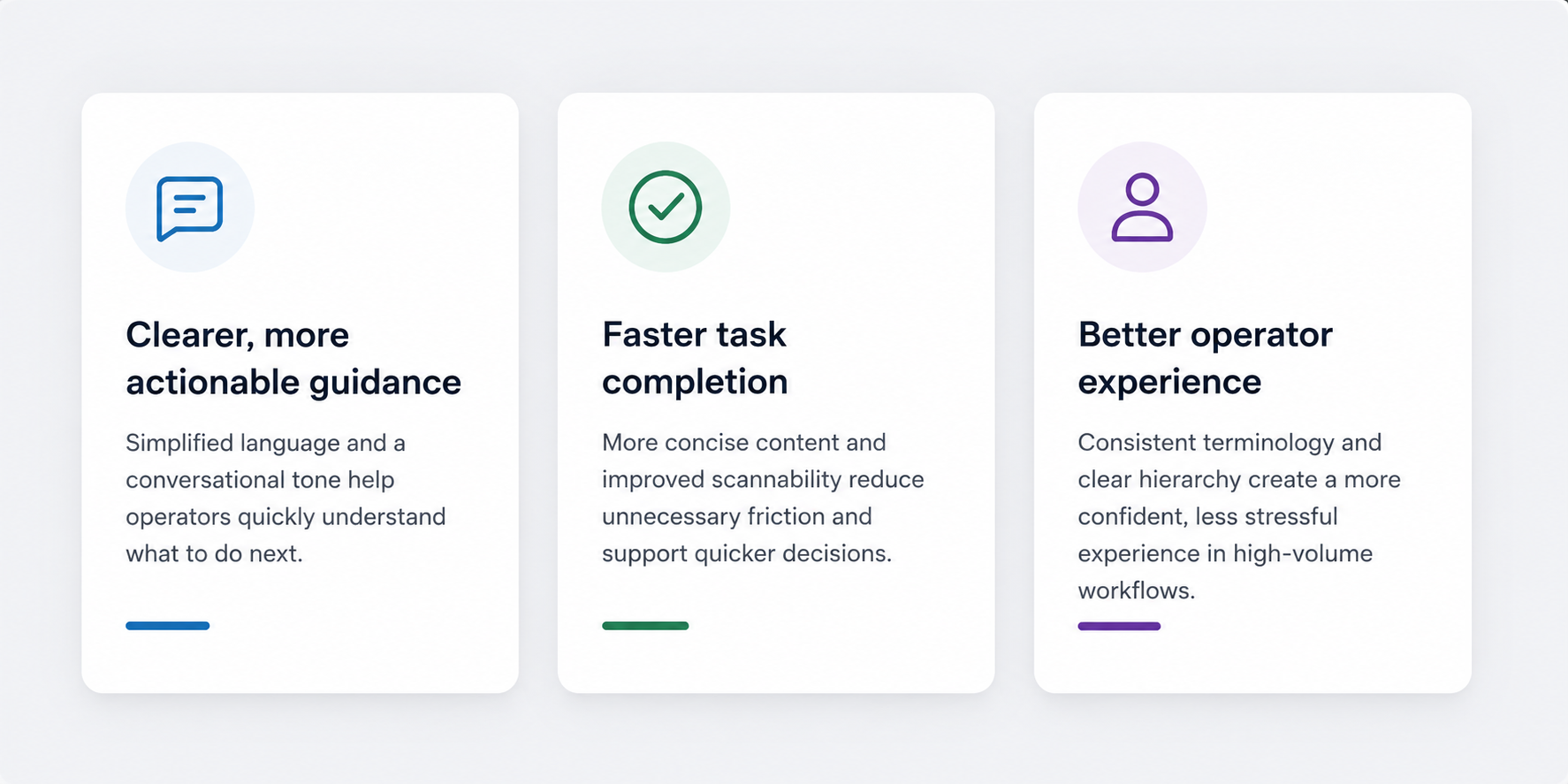
Improved conversational structure and response clarity helped users complete operational tasks more efficiently
“Consistent language and actionable guidance helped users move through complex workflows with greater confidence.”
Reflection
Operational AI should support users, not compete for attention
Designing conversational systems for enterprise environments reinforced the importance of structure, prioritization, and human-centered communication
Designing conversational systems for enterprise environments reinforced the importance of clarity, structure, and human-centered communication.