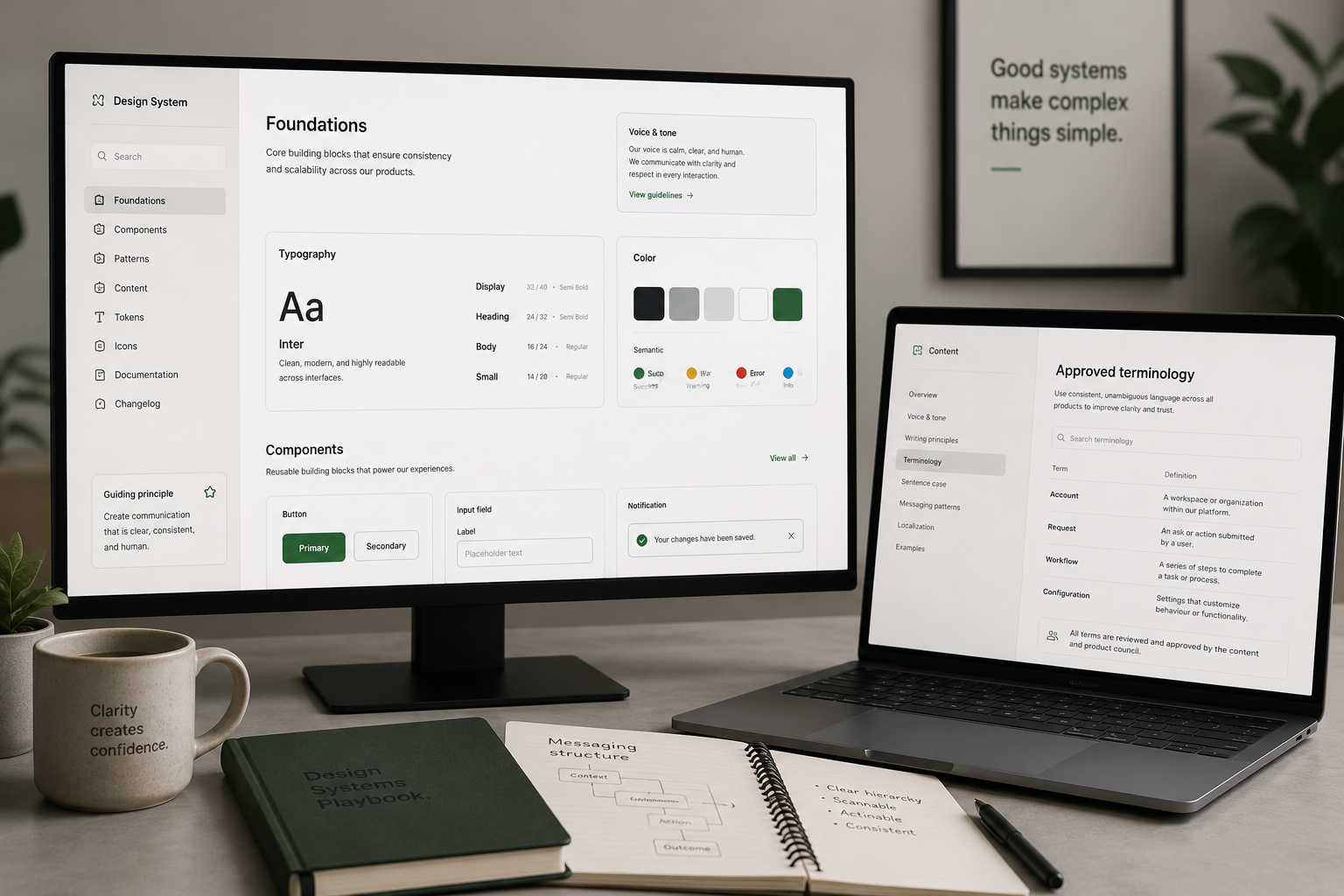
Design Systems & Governance
Building scalable UX content systems for enterprise products
Some visuals and product details have been generalized due to confidentiality requirements. The UX writing process and content strategy reflect my actual contributions.
Role
UX Writer / Content Designer
Focus areas
Design systems, scalable UX writing patterns, interface consistency, enterprise usability, component language
Collaboration
Product design, UX design, engineering, development, design systems stakeholders
Overview
Scalable systems depend on consistent communication
Creating reusable UX writing patterns and governance standards across complex operational workflows
“A design system isn’t a project. It’s a product serving products.”
Enterprise products require more than strong UX writing. They require scalable systems that support consistency across teams, workflows, and platforms.
This project focused on building reusable content patterns, governance standards, and localization-ready frameworks that improved clarity, reduced fragmentation, and created a more unified user experience across complex enterprise environments.
The problem
Inconsistent language creates inconsistent experiences
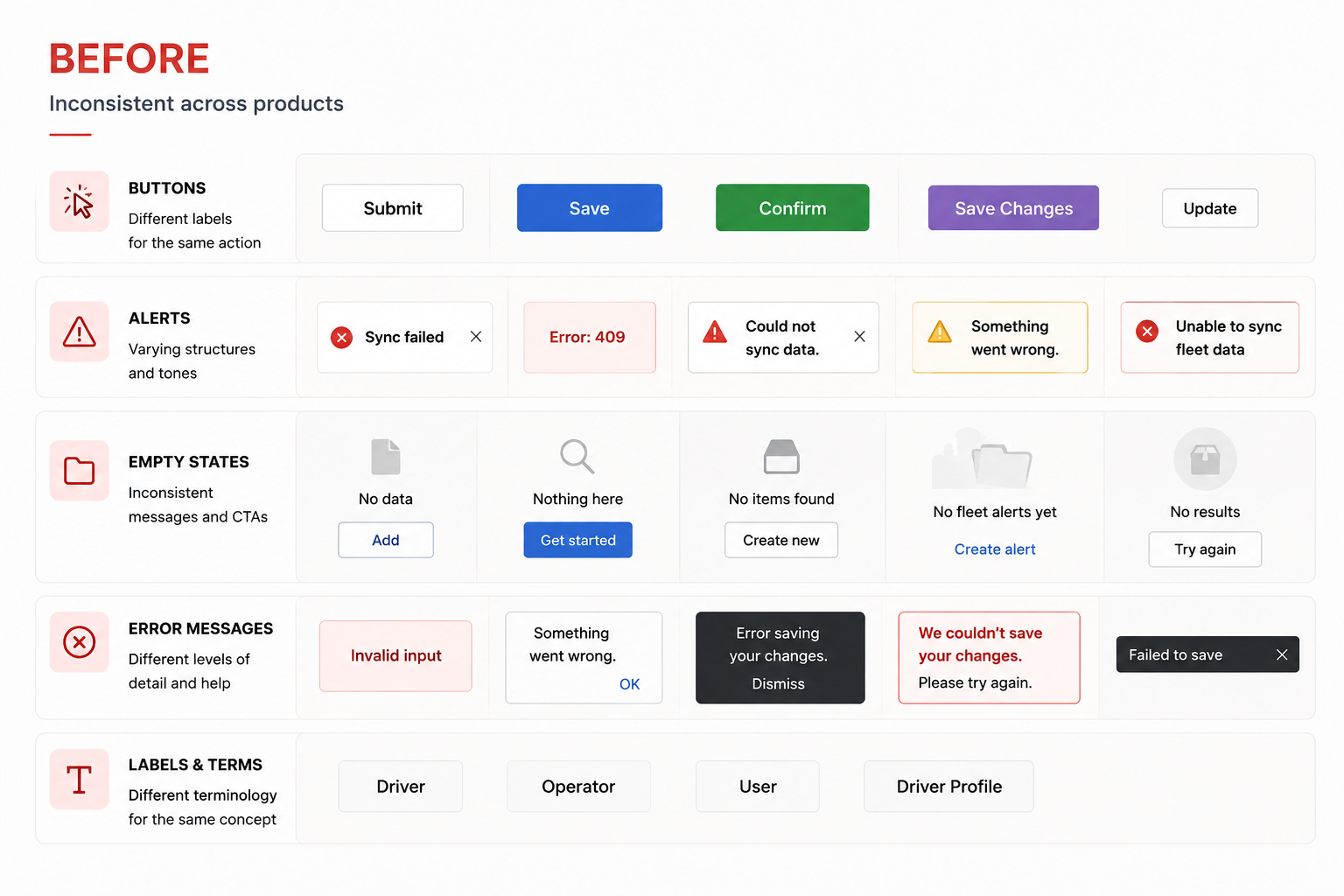
Different product areas often used inconsistent terminology, component behaviors, and interface structures, creating unnecessary friction for users navigating complex operational workflows.
Without clear content standards and reusable communication patterns, similar actions and system behaviors were sometimes described differently across experiences. This increased cognitive load, reduced predictability, and made interfaces harder to scan and learn efficiently.
The challenge was to create scalable content patterns that improved consistency while supporting flexibility across evolving enterprise workflows and product requirements.
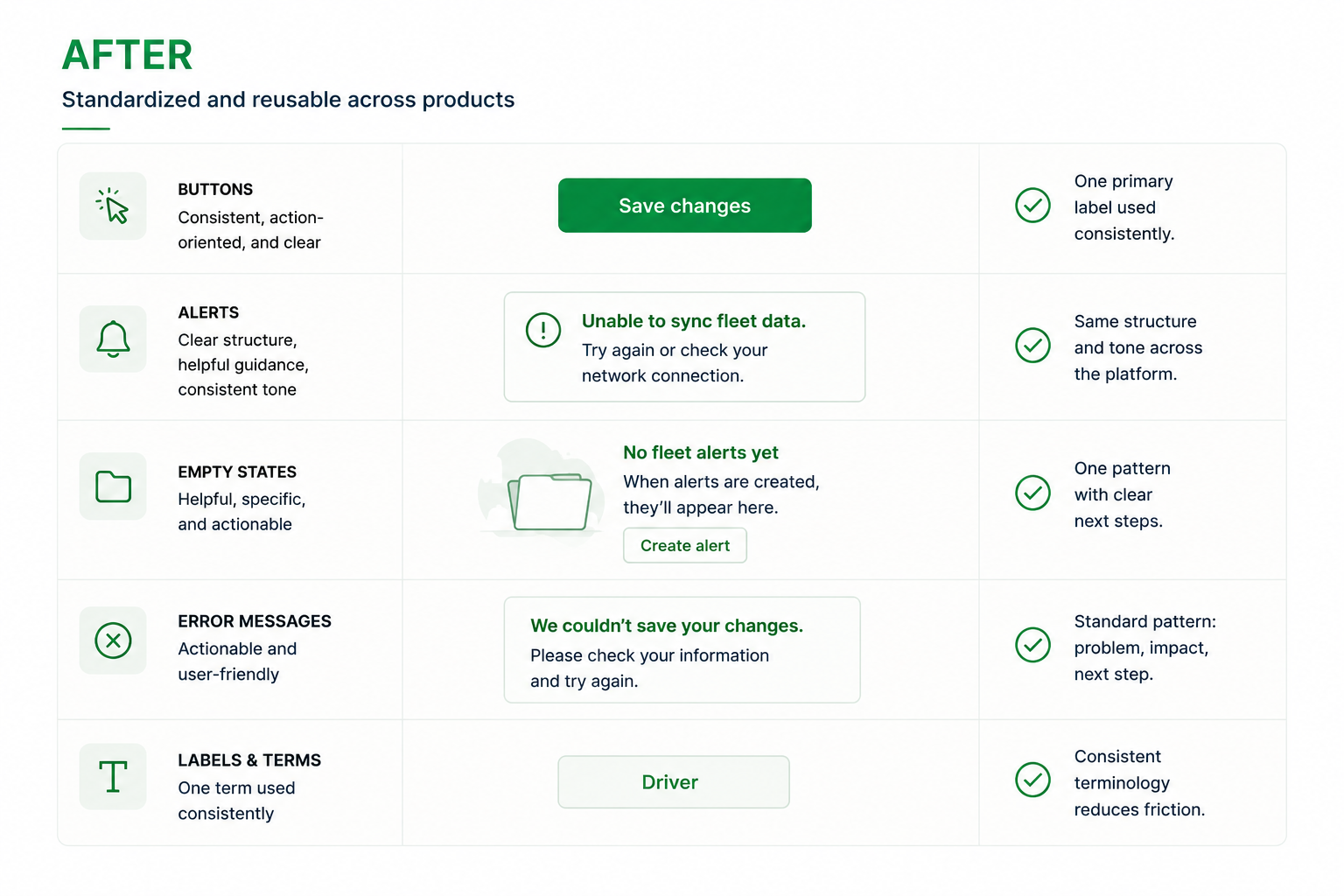
As systems scaled, inconsistent terminology and communication patterns made interfaces harder to navigate and maintain
The process
Strong systems create clarity at scale
The work focused on creating governance, clearer standards, reusable content structures, and more consistent interface behaviors
The project focused on simplifying terminology, improving component hierarchy, and creating scalable UX writing patterns across operational workflows and enterprise experiences.
Collaboration with product design, engineering, and cross-functional stakeholders helped align interface language, usability expectations, and communication standards throughout the system.
The result was a consistent, scalable, and user-centered experience across products and teams.
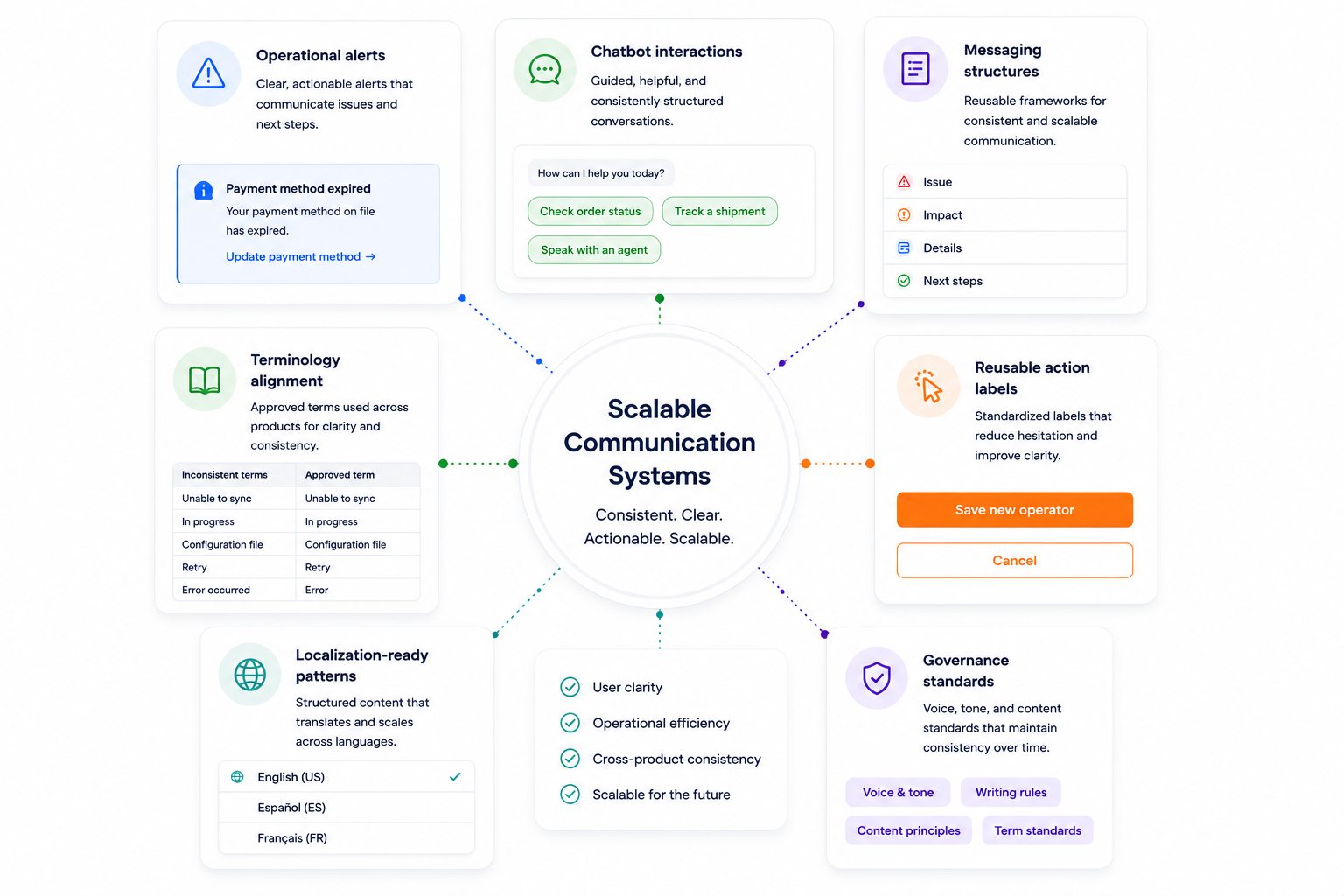
Defined voice and tone principles
Created communication that feels calm, clear, and human across every interaction.
These standards helped establish more consistent conversational patterns across components, workflows, and operational experiences.

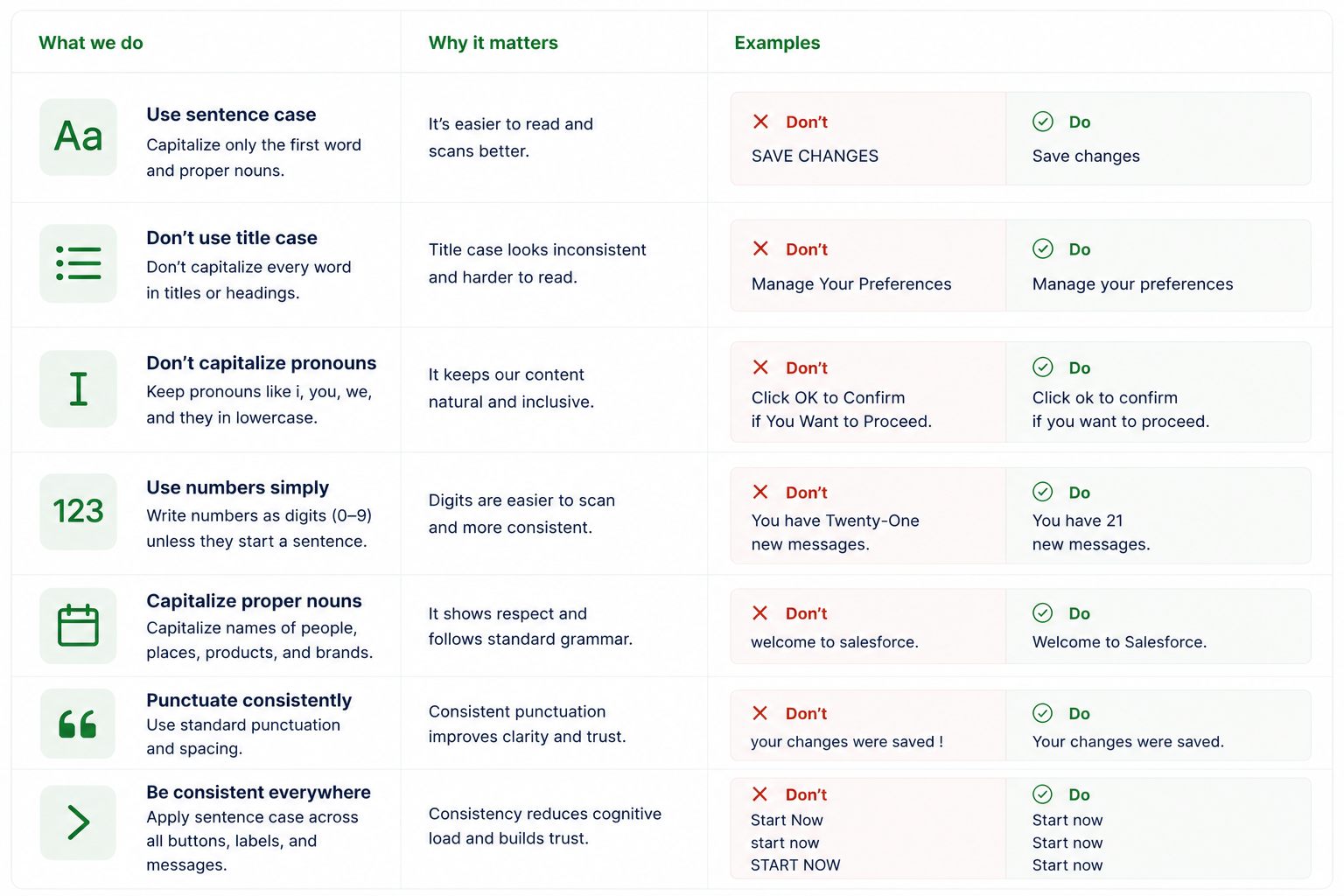
Sentence case standards
Improved readability and consistency through scalable interface writing conventions.
Standardizing sentence case across components helped create more predictable interactions and made interfaces easier to scan within complex operational workflows.
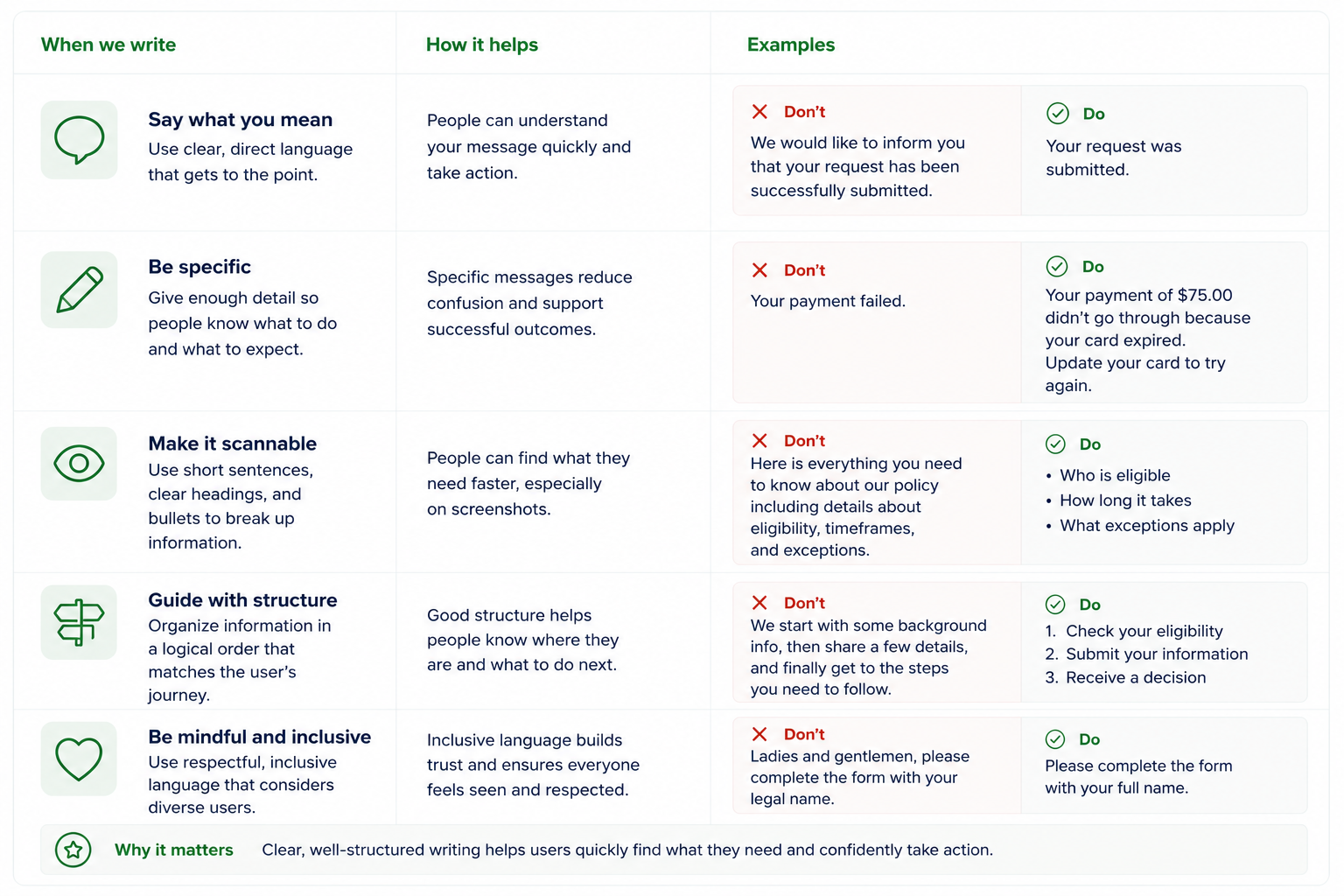
Approved terminology patterns
Standardized product language to reduce ambiguity and improve user comprehension.
Aligning terminology across shared components and workflows helped create more consistent experiences while improving clarity throughout the enterprise platform.
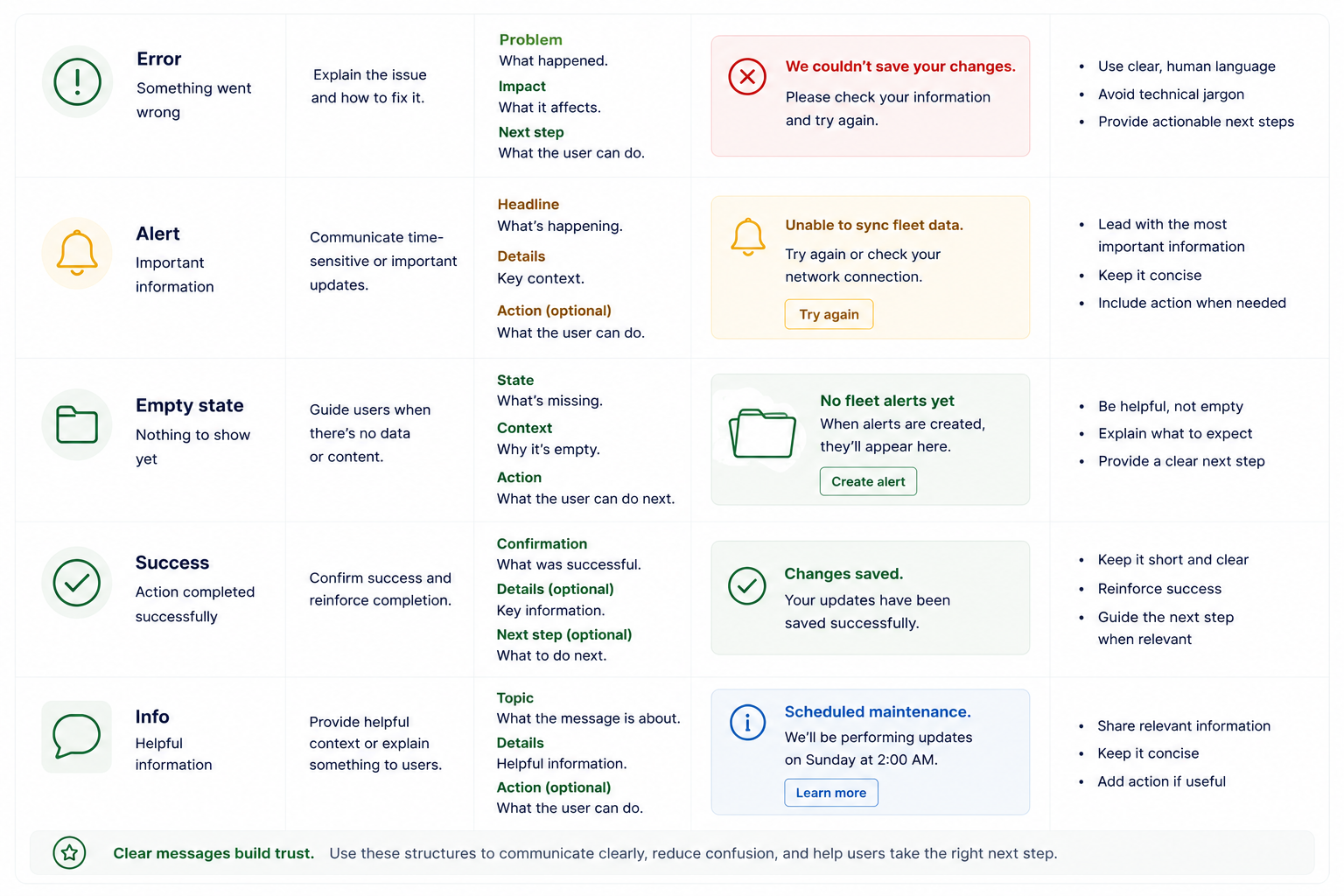
Messaging structures
Used repeatable communication patterns that guided users clearly and efficiently.
Establishing more consistent messaging structures helped improve scanability, support faster comprehension, and create more predictable interactions across operational workflows.
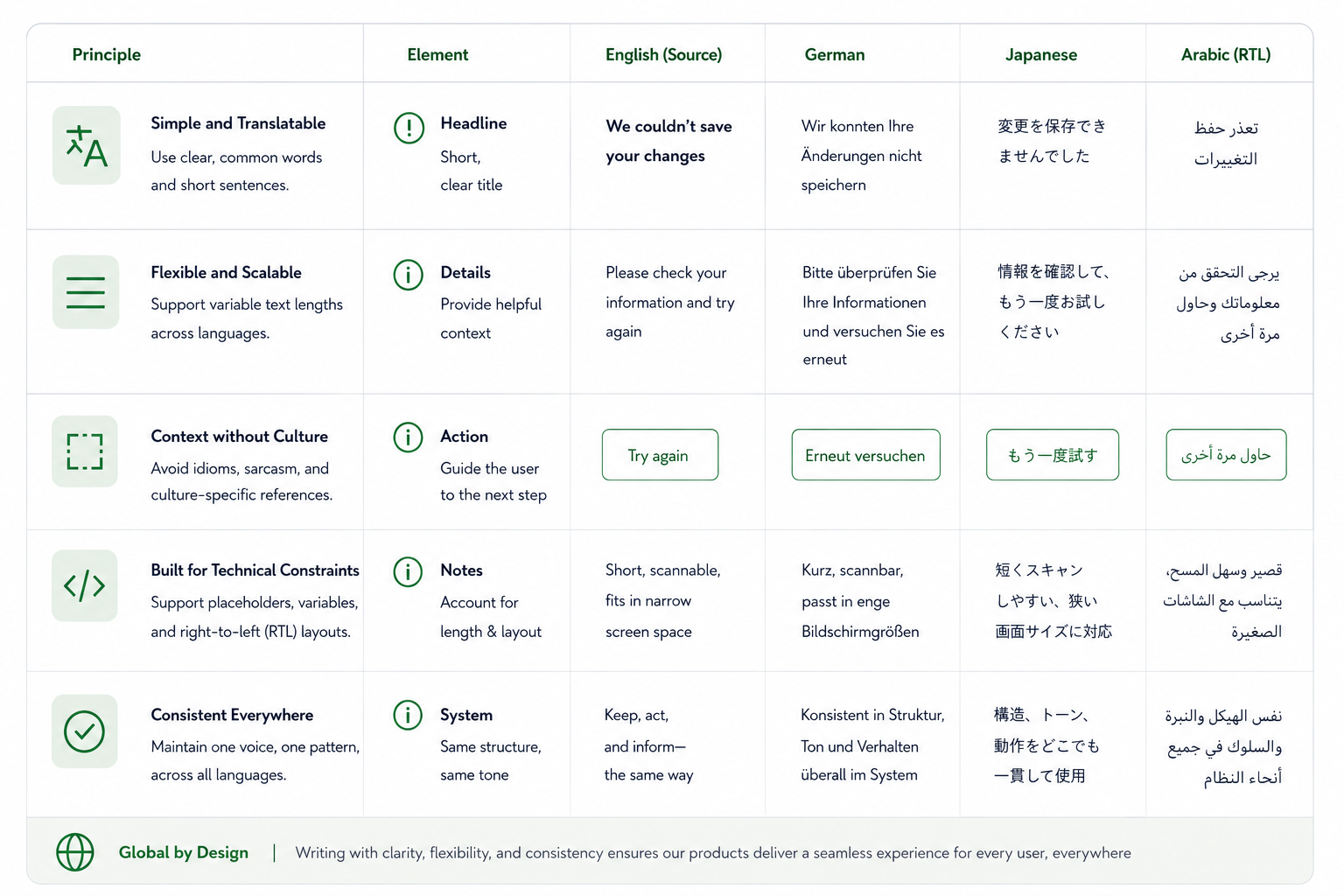
Localization-ready patterns
Designed flexible content structures that scaled clearly across languages and regions.
Creating more adaptable communication patterns helped support translation consistency while improving clarity and usability across global enterprise experiences.
Outcomes and impact
Consistency made the product feel more predictable and cohesive
Improved consistency and clearer communication patterns helped create more predictable user interactions across the platform.
Establishing more scalable UX writing patterns and improving interface consistency helped reduce friction across operational workflows while supporting a more cohesive enterprise experience.
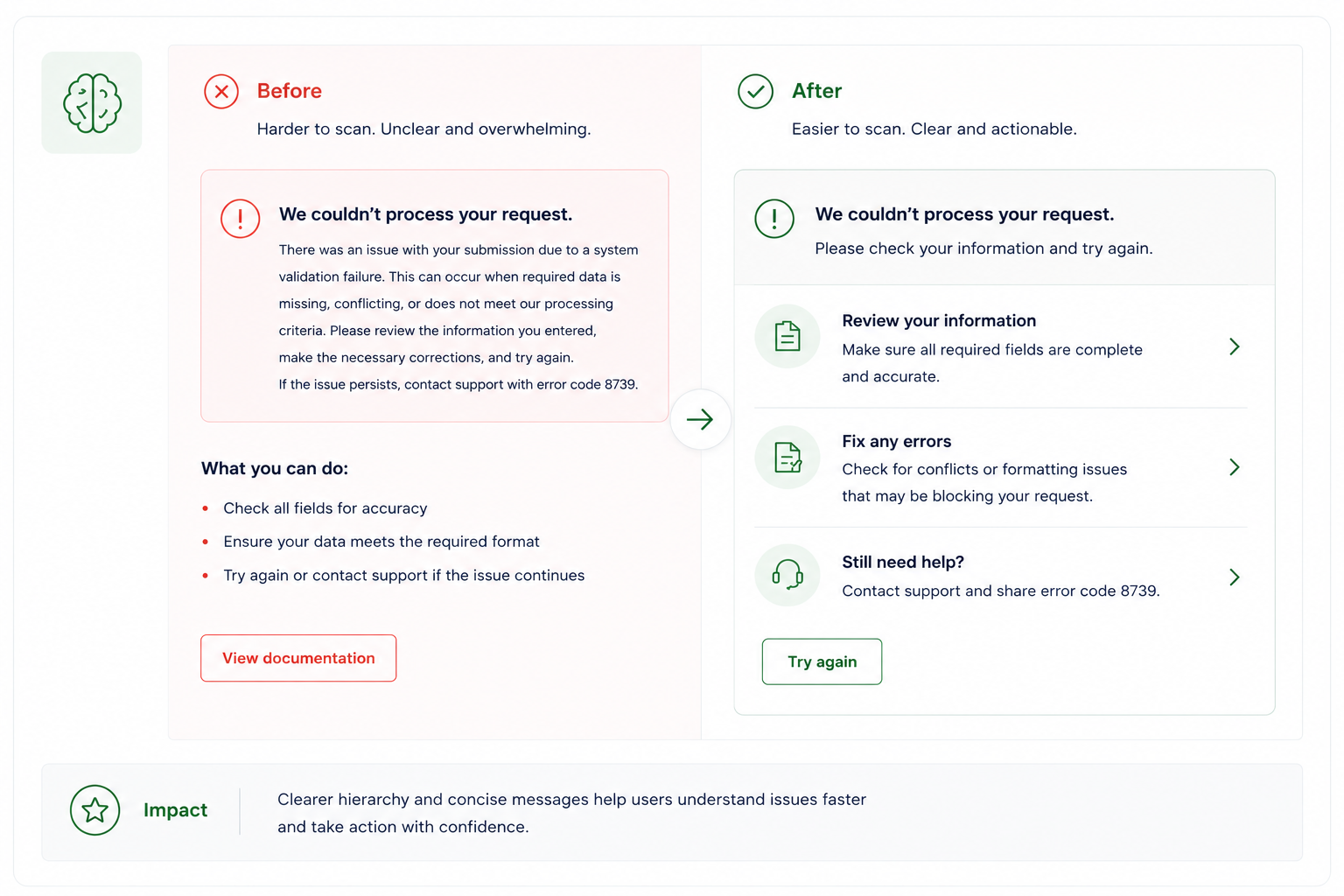
Reduced cognitive load
Simplified messaging patterns improved scannability across operational workflows
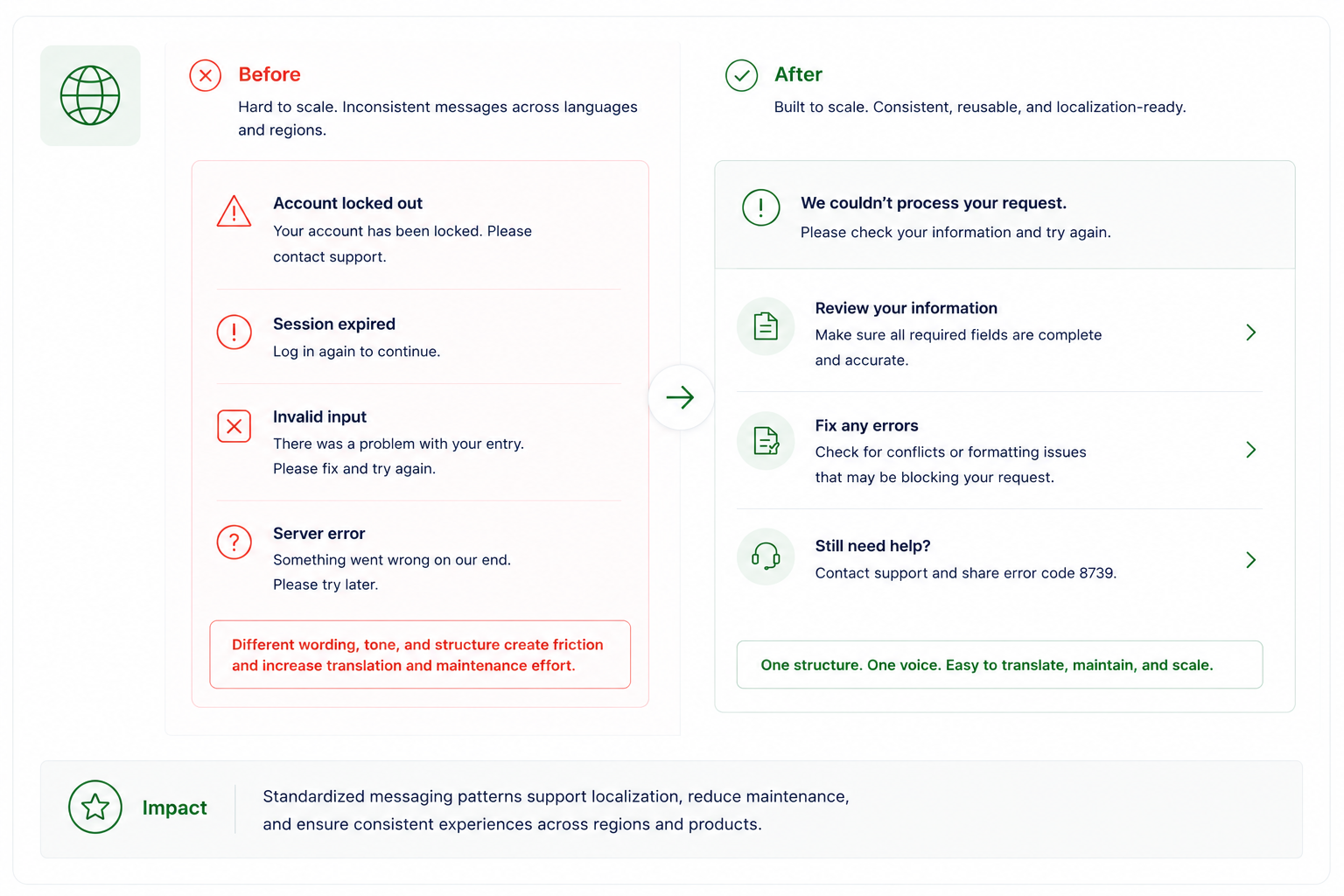
Increased consistency
Reusable terminology and sentence case standards created more predictable interactions across products.

Scalable communication systems
Standardized structures supported localization, governance, and long-term content maintenance.
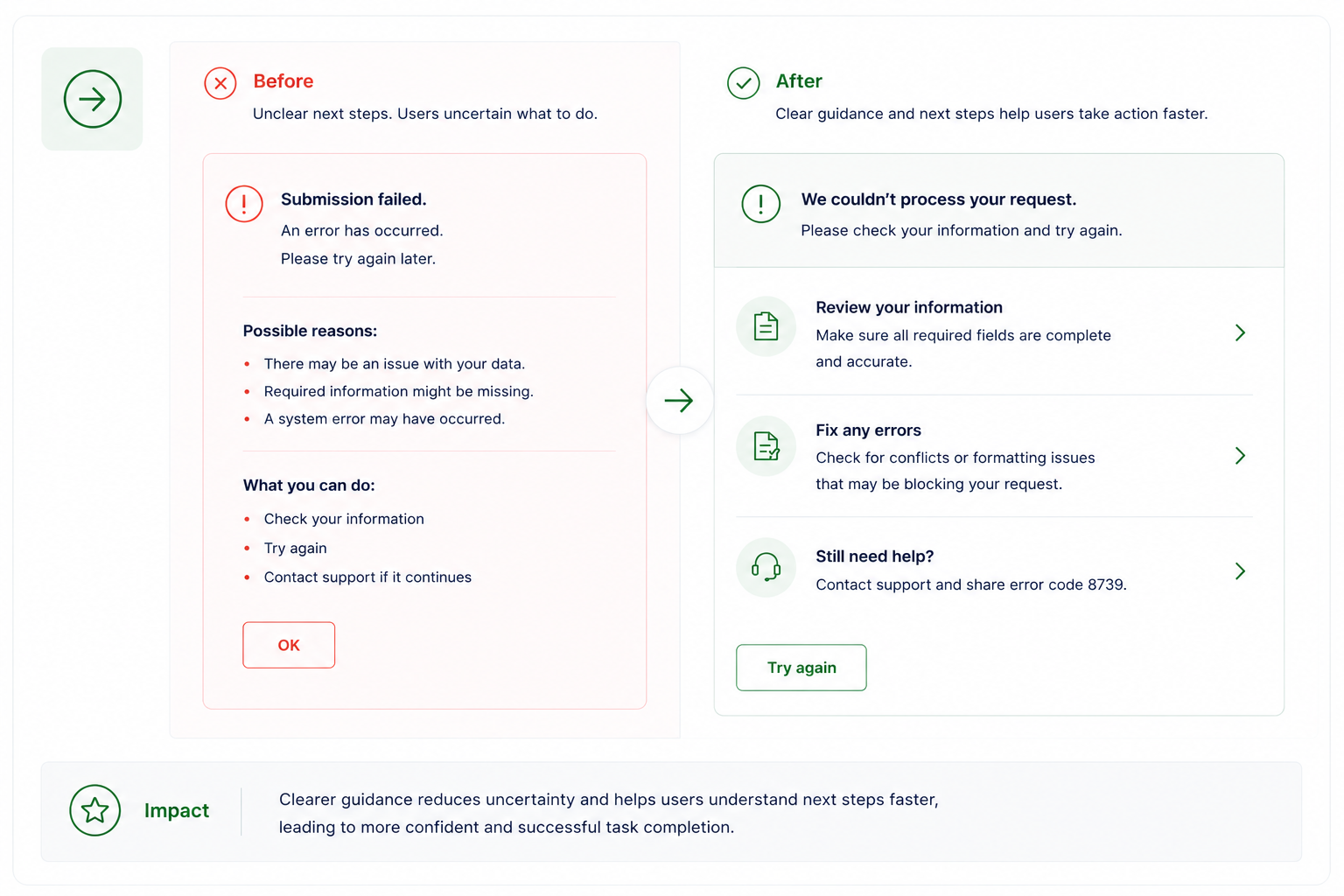
Improved actionability
Clearer guidance helped users understand next steps faster during critical workflows.
Clearer terminology, improved hierarchy, and more reusable communication structures made interfaces easier to scan, navigate, and maintain across evolving product areas.
The work also reinforced stronger alignment between design, content, and engineering teams by creating more predictable communication standards that could scale more effectively across the system.
Reflection
Design systems are communication systems
Scalable communication patterns play a critical role in usability, consistency, and long-term product growth
This project reinforced that design systems are communication systems, not just collections of components. As products scale, consistent terminology, hierarchy, and messaging patterns become essential to usability and predictability.
I also saw how content standards can extend beyond individual screens to improve collaboration, localization, maintenance, and product cohesion. The most valuable content design work wasn't a single piece of copy. It was creating a system that helped teams make better content decisions at scale.