
Operational Alerts & Communication
Designing operational clarity across enterprise workflows
Some visuals and product details have been generalized due to confidentiality requirements. The UX writing process and content strategy reflect my actual contributions.
Role
UX Writer / Content Designer
Focus areas
Alert hierarchy, operational workflows, enterprise usability, actionable system communication, interface clarity
Collaboration
Product design, interaction design, engineering, development, stakeholders
Overview
Operational systems move fast. Communication should too.
A communication systems initiative focused on improving alert clarity, prioritization, and usability across operational interfaces
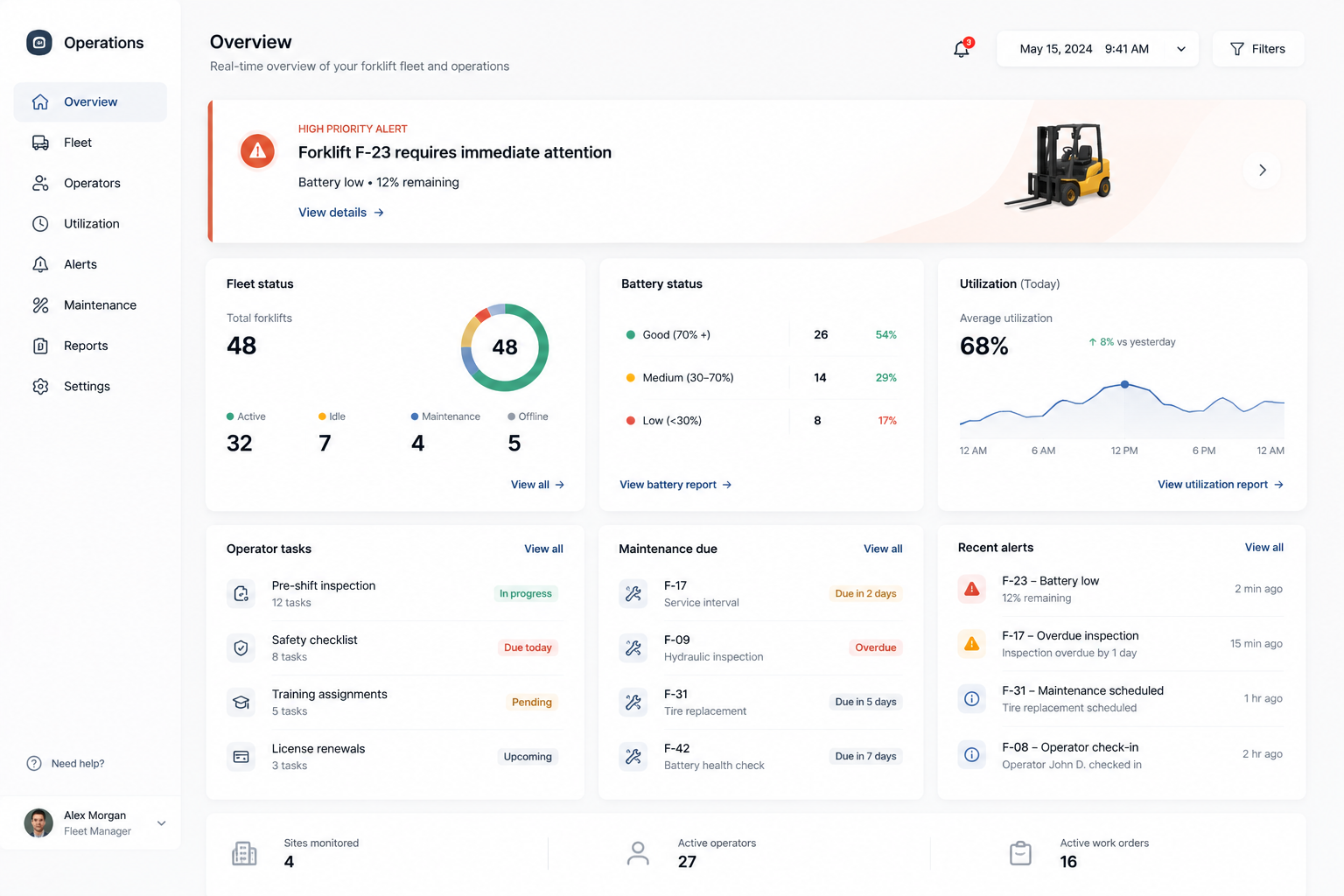
This project focused on improving clarity and reducing cognitive load across high-volume operational workflows.
Key focus areas:
• Messaging hierarchy
• Operational guidance
• Urgency communication
• Action-oriented messaging
• Workflow clarity
• Scanability improvements
The work emphasized faster comprehension, reduced friction, and more confident decision-making within complex enterprise environments.

The problem
When everything feels urgent, nothing stands out
Dense operational systems can overwhelm users with competing signals, inconsistent priorities, and unclear communication


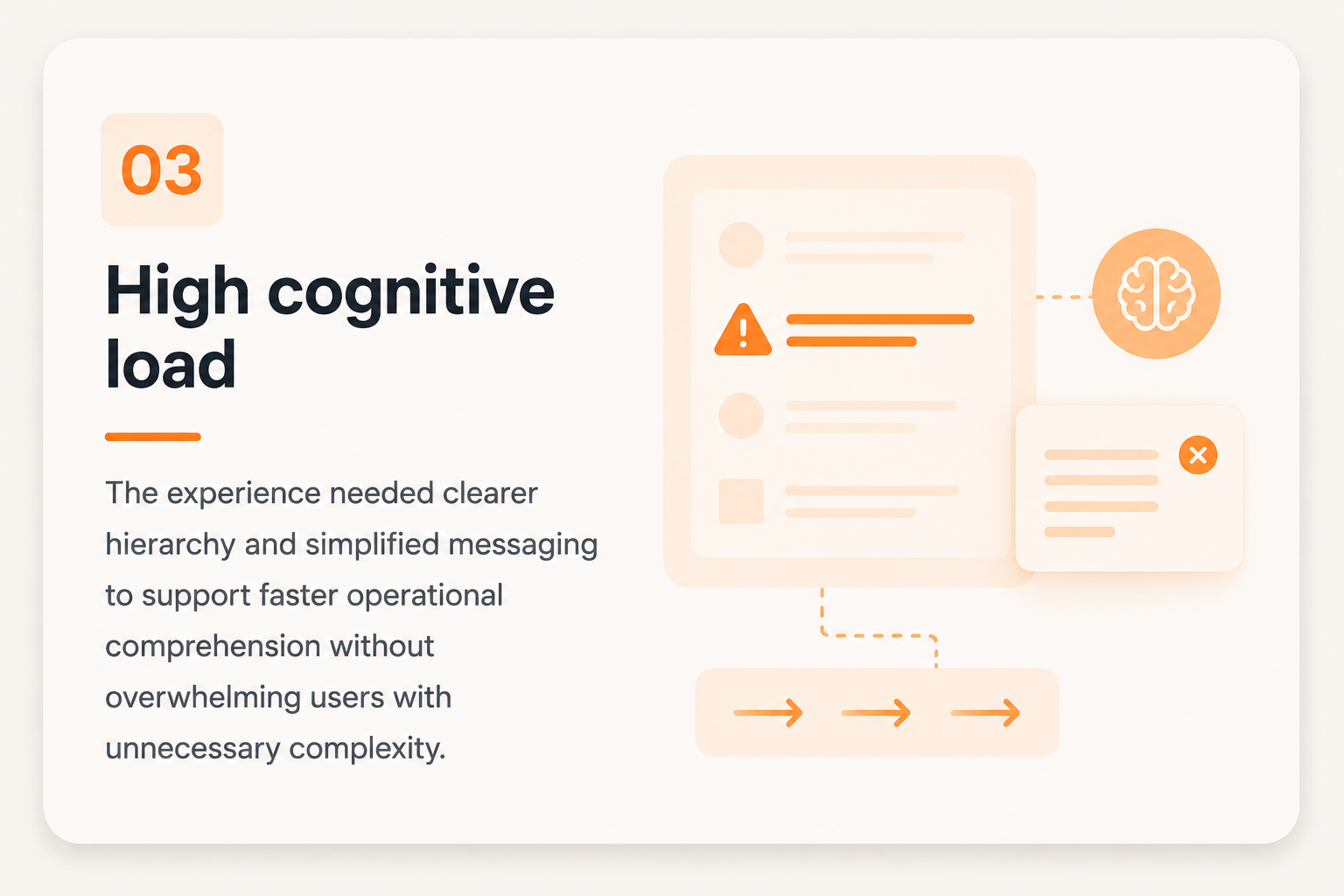
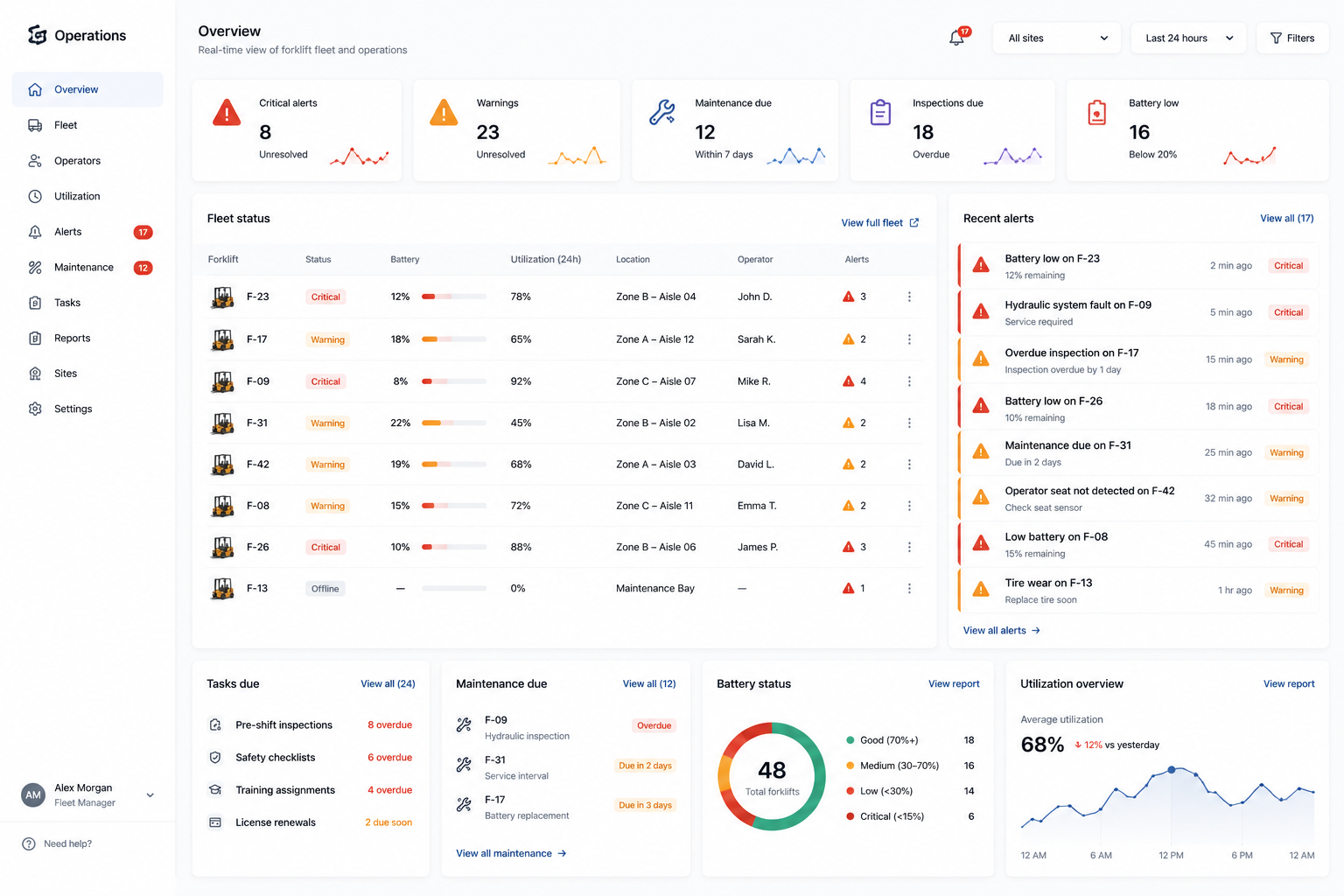
Operational complexity
Alert overload

The process
Clarity starts with hierarchy
Work focused on simplifying alert structures, improving prioritization, and creating clearer operational guidance
I used a structured approach to creating clearer, more actionable alerts that help operators identify issues faster and respond with confidence.
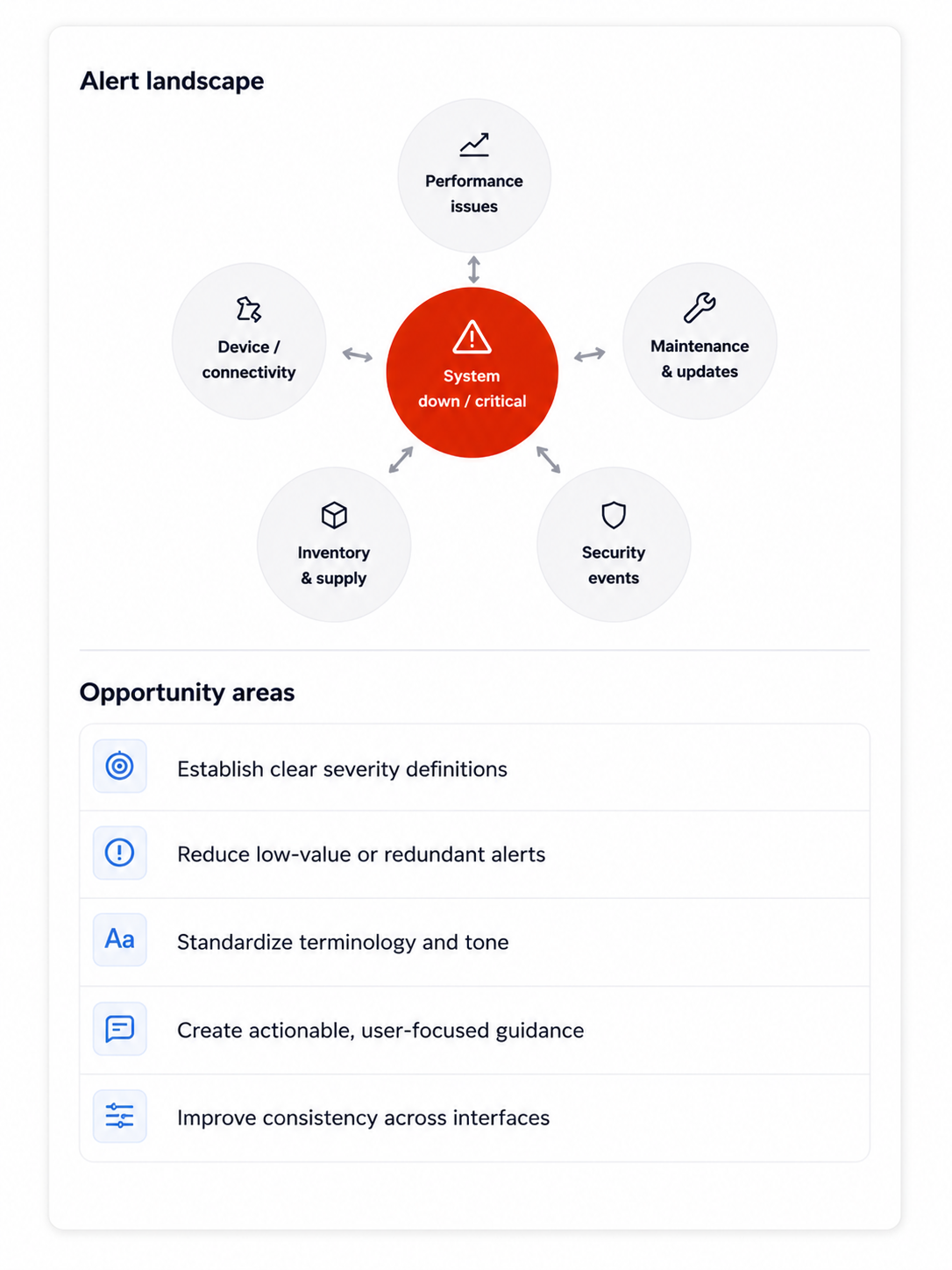
Audit
Identifying communication friction
Reviewed alert behaviors across workflows and interface states to uncover inconsistencies, competing priorities, and gaps in hierarchy.

Analyze
Prioritizing operational clarity
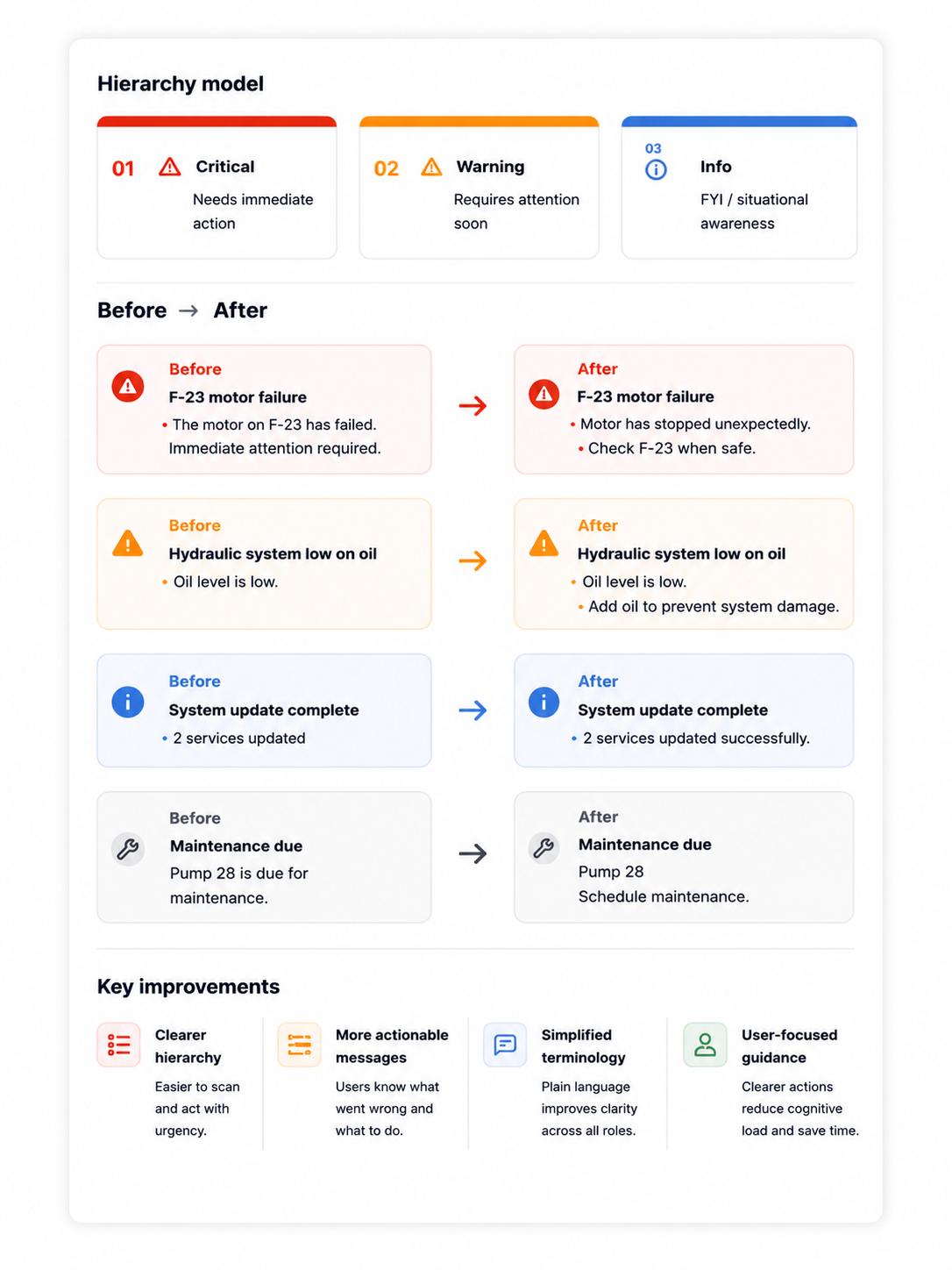
Mapped alert types, triggers, and user impact to uncover opportunities for clearer hierarchy, stronger prioritization, and more consistent messaging.
Refine
Designing clearer guidance
Reworked hierarchy, simplified terminology, and created more actionable communication patterns that prioritized critical information.
Validate
Supporting consistency across workflows
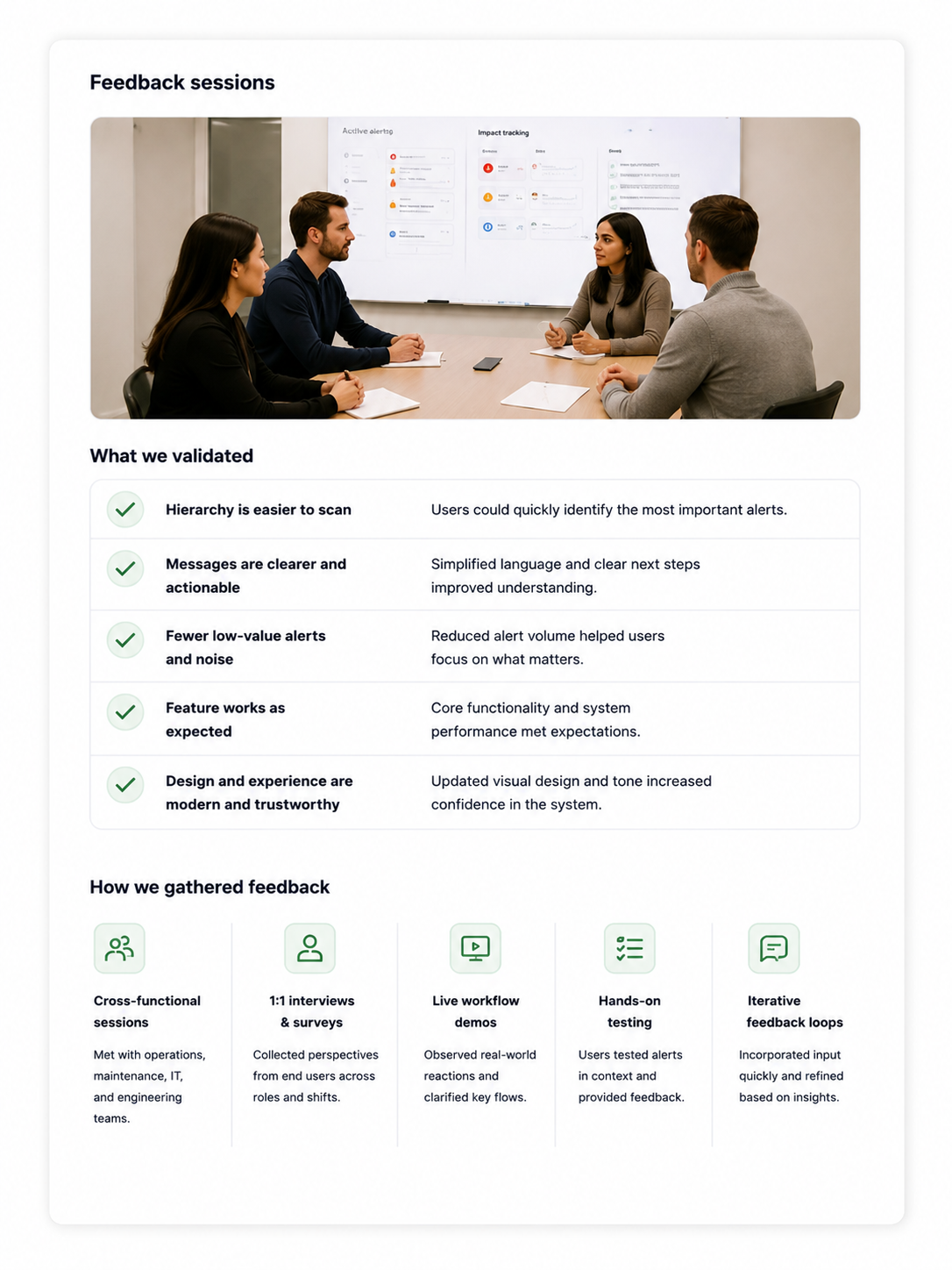
Worked closely with product, design, and engineering teams to validate messaging patterns and align communication across operational workflows.
Implement
Improving communication at scale
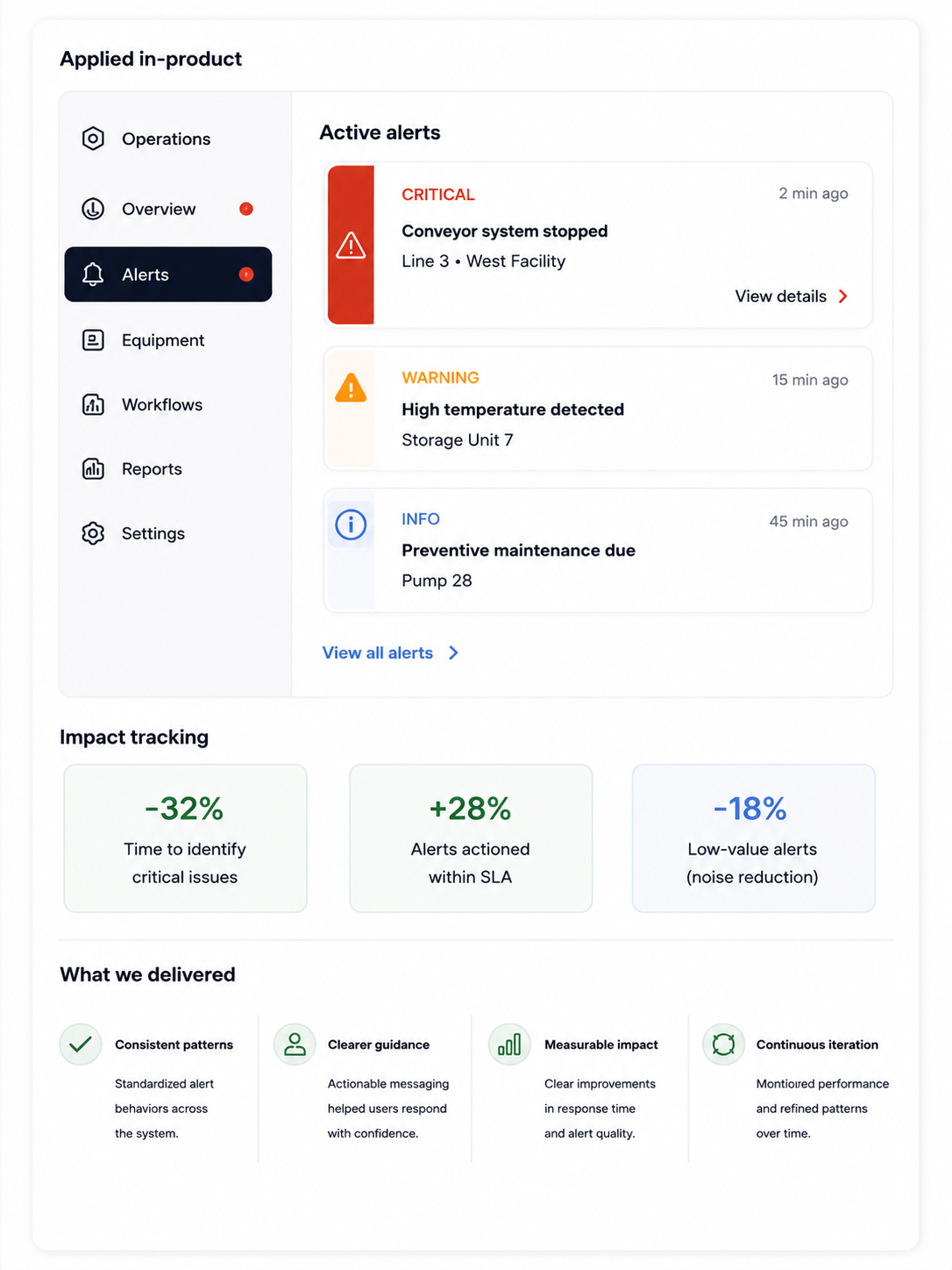
Applied updated patterns across the system while iterating on messaging clarity, consistency, and operational usability.
Outcomes & impact
Clearer systems support faster decisions
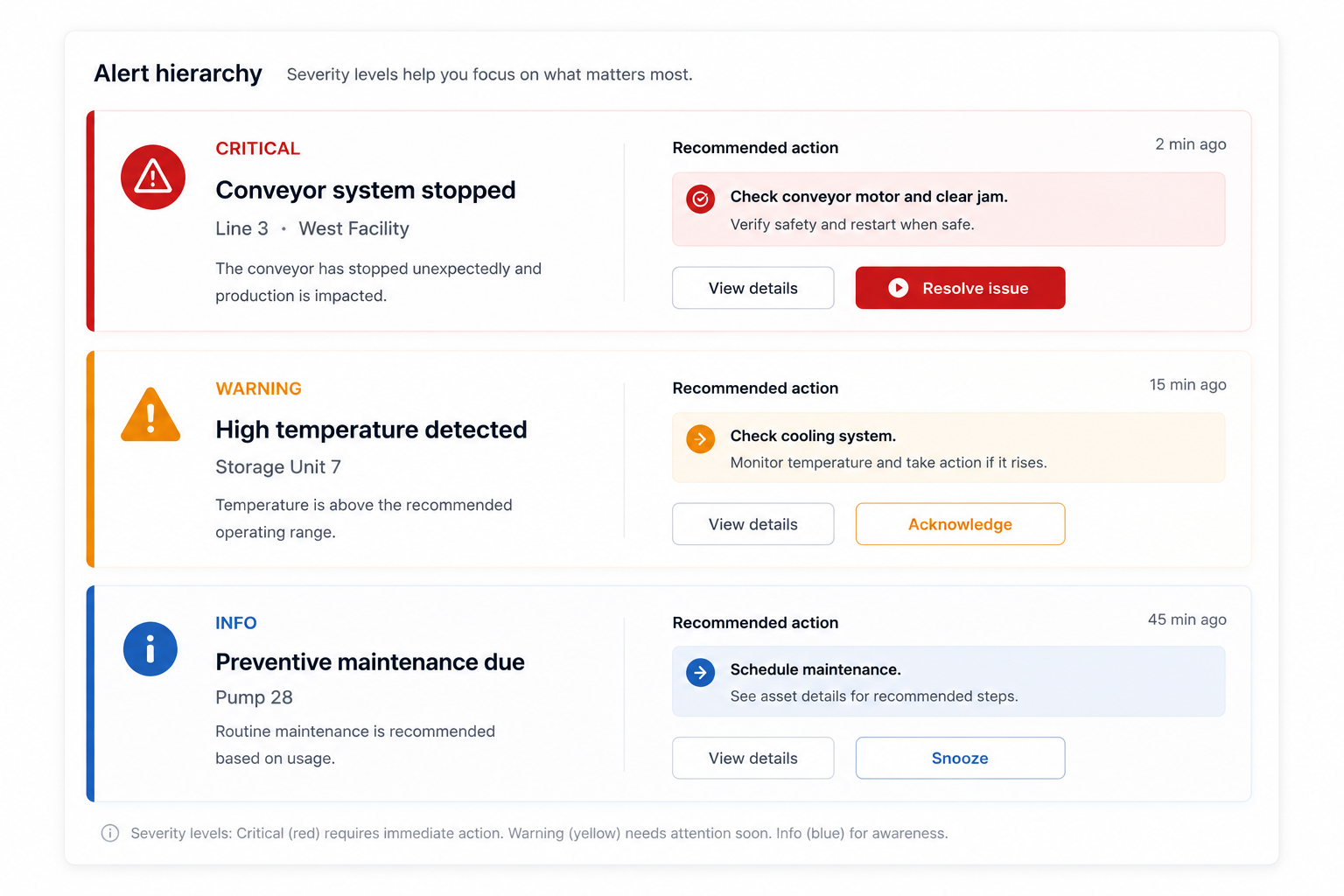
Improved hierarchy and more consistent communication patterns helped create predictable operational experiences
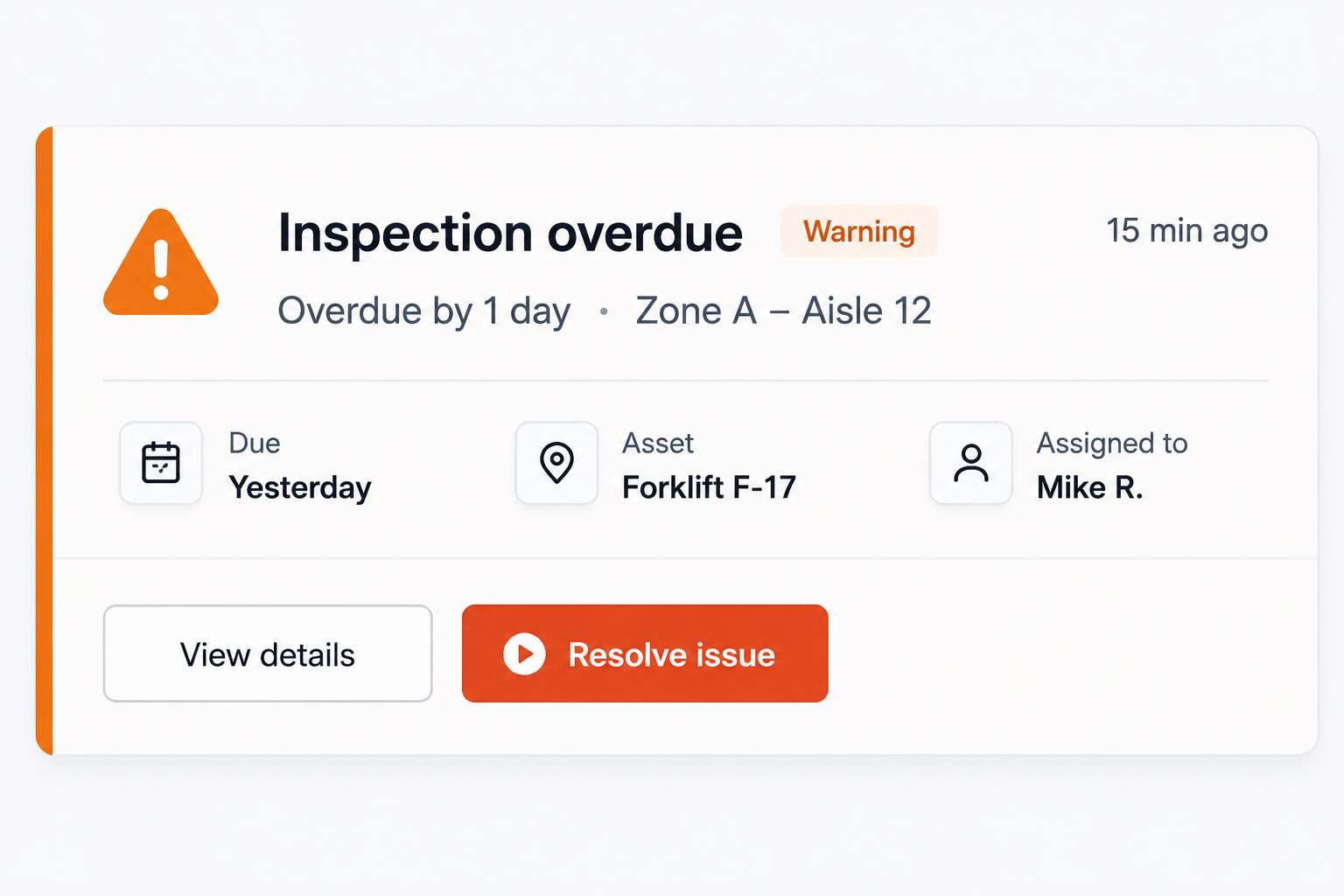
Clearer prioritization, simplified messaging, and improved hierarchy reduced friction across operational workflows and supported faster issue recognition.
Consistent terminology and actionable guidance created experiences that felt easier to scan, more predictable to navigate, and more supportive under pressure.
The project reinforced how strongly communication structure influences usability within complex enterprise systems.

01
Faster comprehension
Improved hierarchy and clearer communication patterns helped users identify critical operational issues more quickly across high-volume workflows.
02
Reduced cognitive load
Simplified layouts, grouped information, and more intentional prioritization reduced unnecessary visual competition and scanning effort.
03
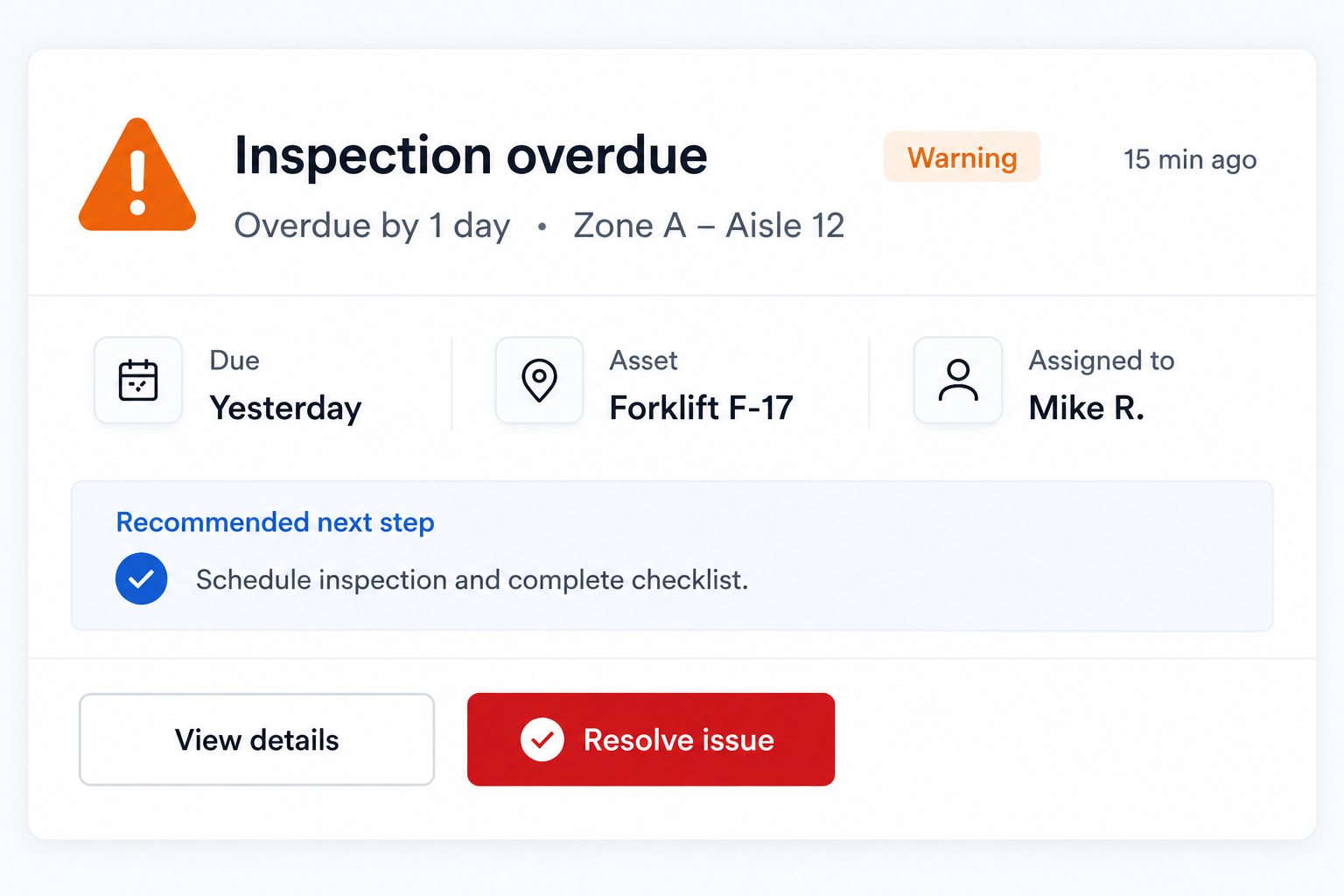
More confident decision-making
Action-oriented messaging and clearer next steps helped users respond more efficiently within time-sensitive operational environments.
Reflection
Operational systems should guide attention, not compete for it
Clear communication systems play a critical role in helping users prioritize information and act confidently within complex environments
“Good operational UX helps people focus on what matters.”

This project reinforced the importance of clear communication systems within high-volume operational environments.
Effective hierarchy, consistent terminology, and actionable messaging helped reduce friction, support faster decisions, and guide user attention more intentionally.